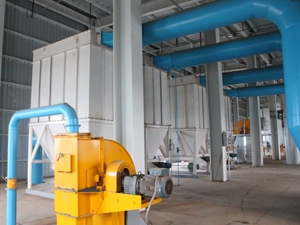
As global demand for high-quality palm kernel oil surges, exporters increasingly spotlight advanced separation technologies to maximize yield and product purity. Among transformative innovations, centrifugal separation stands out as a pivotal solution, dramatically enhancing oil-water-solid phase separation. This article explores the physical principles behind centrifugal separation, compares predominant centrifuge types, and shares actionable optimization insights backed by real-world Southeast Asian case studies. Practical approaches to emulsification challenges and future industry trajectories highlight why modern centrifugal systems will define next-generation palm kernel oil processing.
Centrifugal separation leverages the fundamental physical concept of density differences subjected to angular acceleration. When palm kernel oil mixtures containing oil, water, and solid residues spin at high velocity inside a centrifuge, centrifugal force propels heavier components outward, while lighter fractions gravitate inward, forming distinct layers. This mechanism enables efficient, continuous-phase separation far surpassing conventional gravity settling speed.
Typical operational parameters affecting separation effectiveness include rotational speed (rpm), feed flow rate, and processing temperature. Adjusting these variables carefully can optimize stratification thicknesses and purity levels, reducing residual oil in waste solids from industry averages around 7-8% to below 4%.
Two major centrifuge types dominate palm kernel oil processing:
Exporters should evaluate feedstock characteristics: plants processing raw palm kernel press cake with bulky solids usually prefer decanters, while refined oil clarification favors disc stack centrifuges for their superior oil clarity.
A leading palm kernel oil exporter in Malaysia recently fine-tuned centrifuge settings, resulting in remarkable quality enhancement and cost savings. By incrementally raising rotational speed from 4,500 rpm to 5,200 rpm and concurrently reducing feed rate by 15%, the residual oil content in the solid cake was cut down from 8% to 3.5%. Precise temperature management at 55°C minimized viscosity-related separation inefficiency.
These adjustments translated into a 12% net increase in sellable oil yield and a 20% reduction in solvent extraction demands downstream—directly boosting profitability margins in a competitive international marketplace.
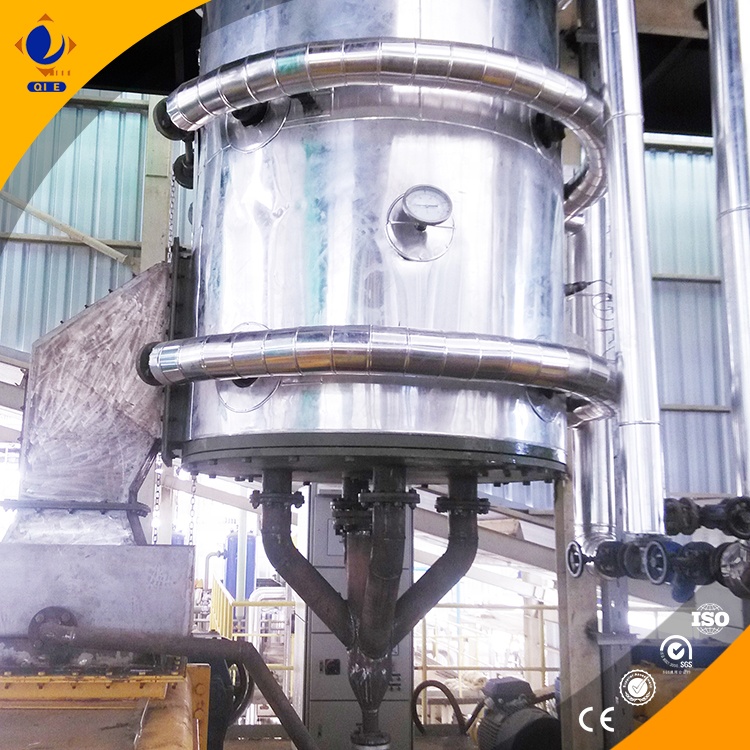
Oil-water emulsions frequently hinder efficient phase separation, causing loss in oil recovery and increased cleaning frequency. Solutions include:
The future of palm kernel oil processing is digital. Integration of intelligent control systems enables real-time adjustment of rotor speed, feed rate, and temperature, dynamically optimizing separation based on online product purity sensors. Such automation reduces manual intervention, minimizes downtime, and strengthens product consistency—imperative for exporters seeking to build long-term client trust.
Hybrid systems coupling IoT-enabled sensors with AI predictive maintenance are poised to become industry standards by 2030, correlating with rising global quality standards and environmental compliance mandates.

 347
|
347
|
 sesame oil extraction process
extractor and desolventizer optimization
solvent recovery in oil refining
six-step oil refining system
efficient sesame oil production
sesame oil extraction process
extractor and desolventizer optimization
solvent recovery in oil refining
six-step oil refining system
efficient sesame oil production
 492
|
Rice bran oil extrusion equipment
Influence of extruder material
Oil yield improvement
Rice bran oil extraction process
Extruder selection guide
492
|
Rice bran oil extrusion equipment
Influence of extruder material
Oil yield improvement
Rice bran oil extraction process
Extruder selection guide
 60
|
small enterprises
market demand
oil processing
60
|
small enterprises
market demand
oil processing
 415
|
vegetable oil production line
solvent extraction technology
efficient oil processing
415
|
vegetable oil production line
solvent extraction technology
efficient oil processing
 113
|
rice bran oil extrusion machine
extrusion process optimization
oil yield improvement in rice bran oil
rice bran oil processing technology
extruder parameter control
113
|
rice bran oil extrusion machine
extrusion process optimization
oil yield improvement in rice bran oil
rice bran oil processing technology
extruder parameter control





.jpg?x-oss-process=image/resize,m_fill,h_300,w_300/format,webp)