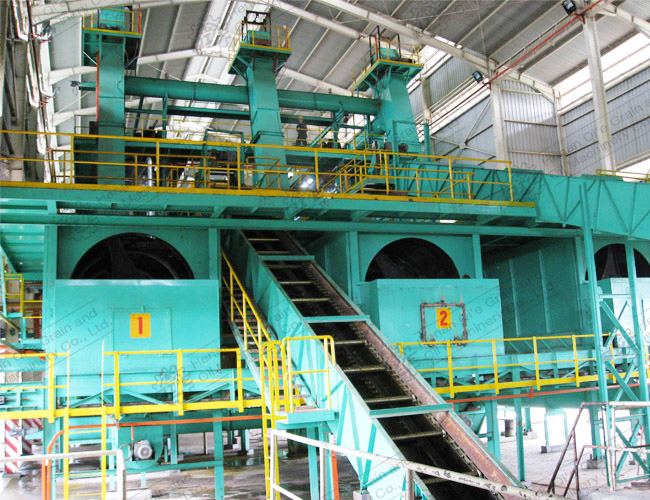
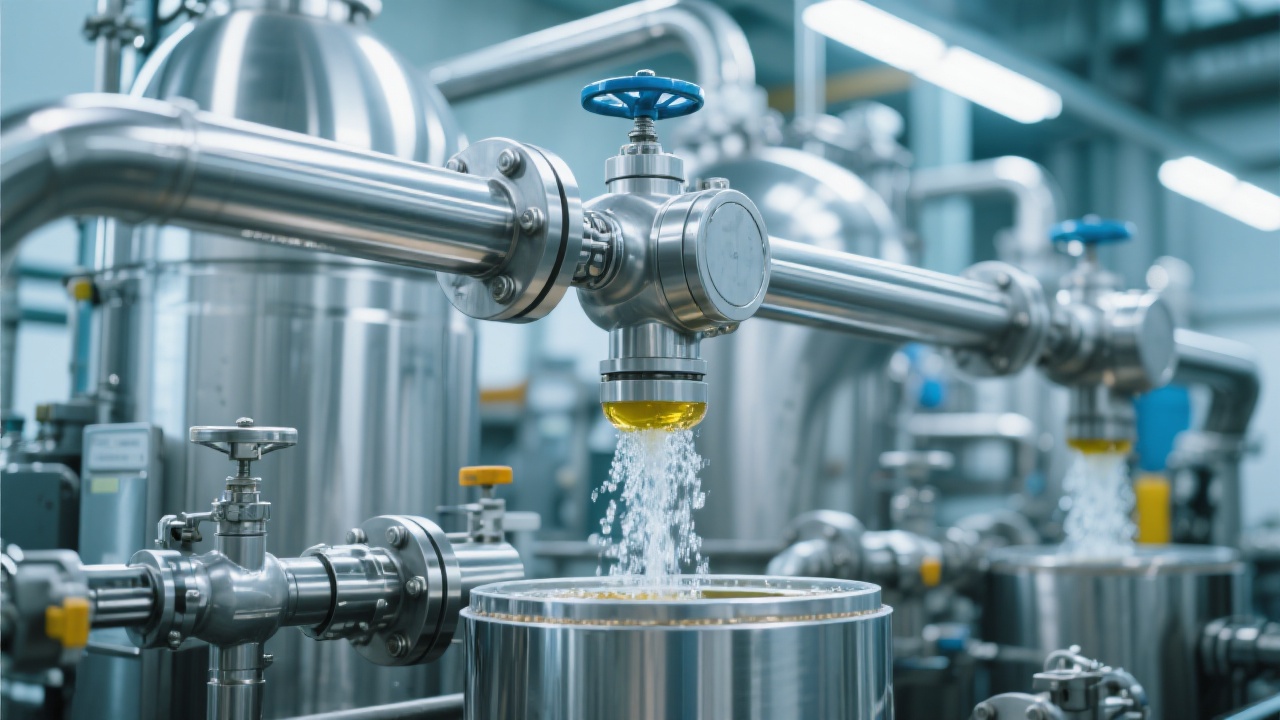
The advancement of centrifugal separation technology has revolutionized the purification of palm kernel oil (PKO), notably improving oil quality and extraction efficiency. At its core, this technology leverages the fundamental principle of density differential — high-speed rotation forces multilayered separation of oil, water, and solid residues in a single automated process.
Centrifugation operates by spinning the palm kernel oil slurry at speeds commonly ranging from 3000 to 6000 rotations per minute (RPM). This process generates centrifugal forces exceeding 1000 times the force of gravity, enabling the denser water and solids to move outward while the lighter oil collects centrally. This physical layering ensures efficient phase separation without chemical additives.
Two primary centrifuge types are widely adopted in palm kernel oil refining:
Selecting the appropriate centrifuge depends on feedstock characteristics and production goals. For instance, decanter centrifuges excel in initial clarification, while disc stack machines achieve final oil polishing.
Precise control of these parameters markedly influences separation efficiency, oil purity, and residual oil content within the sediment:
| Parameter | Effect | Recommended Range |
|---|---|---|
| Rotational Speed (RPM) | Higher RPM increases centrifugal force, improving separation but may cause emulsion formation if excessive. | 3500 - 5500 RPM |
| Feed Rate (m³/h) | Balanced to afford sufficient retention time; too rapid feeding reduces purity, too slow affects throughput. | 8 - 20 m³/h (depending on machine) |
| Operating Temperature (°C) | Influences oil viscosity & amp; emulsion stability. Optimal temp reduces oil entrapment in sediment. | 50 - 60°C |
A palm kernel oil producer optimized their decanter centrifuge parameters—reducing residual oil in the cake from 8% to approximately 6.8%, a relative improvement of 15%. This adjustment involved fine-tuning the feed rate to 12 m³/h, increasing rotational speed to 4800 RPM, and stabilizing temperature at 55°C. Consequently, oil purity consistently exceeded 98%, significantly reducing downstream refining costs and increasing yield.
Persistent emulsification hinders phase separation, often arising from:
Preventative and remedial measures include:
Emulsification commonly occurs due to excessive shear forces at high rotational speeds, feed temperature extremes causing unstable oil-water interfaces, or presence of surface-active impurities. Balancing operational parameters and maintaining stringent feedstock quality can greatly reduce these occurrences.
The integration of IoT-enabled sensors and AI-driven control algorithms promises a new era of intelligent separation. Systems automatically adapt RPM, feed rates, and temperature in real-time to maintain optimal separation, minimizing human error and improving energy efficiency. This aligns with the palm oil industry's growing emphasis on sustainable, green processing technologies.

 486
|
486
|
 palm oil processing enterprises
customized palm kernel oil production line
production flow optimization
regions with high palm cultivation rates
palm oil processing enterprises
customized palm kernel oil production line
production flow optimization
regions with high palm cultivation rates
 373
|
palm kernel crusher selection
palm kernel crushing particle size
crusher maintenance tips
palm kernel oil extraction
crusher fault troubleshooting
373
|
palm kernel crusher selection
palm kernel crushing particle size
crusher maintenance tips
palm kernel oil extraction
crusher fault troubleshooting
 374
|
Cold-pressed sunflower oil production process
Low-temperature pressing technology
High-end edible oil process
Sunflower oil nutrition retention
Cold-pressed equipment selection
374
|
Cold-pressed sunflower oil production process
Low-temperature pressing technology
High-end edible oil process
Sunflower oil nutrition retention
Cold-pressed equipment selection
 457
|
Sesame Oil Extraction Machinery
Hydraulic Oil Press for Sesame
Screw Oil Press for Sesame Oil
Solvent Extraction Equipment for Sesame Oil
Supercritical CO2 Extraction Equipment
Water Substitution Equipment for Sesame
Leaching and Refining Equipment for Sesame Oil
Quality Sesame Oil Production Machinery
Edible Oil Extraction Technology
457
|
Sesame Oil Extraction Machinery
Hydraulic Oil Press for Sesame
Screw Oil Press for Sesame Oil
Solvent Extraction Equipment for Sesame Oil
Supercritical CO2 Extraction Equipment
Water Substitution Equipment for Sesame
Leaching and Refining Equipment for Sesame Oil
Quality Sesame Oil Production Machinery
Edible Oil Extraction Technology
 95
|
Soybean Oil Extraction Machinery
Efficient Soybean Oil Presses
Advanced Oil Extraction Equipment
Soybean Oil Production Line
High-Quality Soybean Oil Refining
Soybean Oil Processing Technology
Automated Oil Extraction Solutions
Versatile Oil Extraction Machinery
Cold Press Soybean Oil Solutions
Soybean Oil Extraction Methods
95
|
Soybean Oil Extraction Machinery
Efficient Soybean Oil Presses
Advanced Oil Extraction Equipment
Soybean Oil Production Line
High-Quality Soybean Oil Refining
Soybean Oil Processing Technology
Automated Oil Extraction Solutions
Versatile Oil Extraction Machinery
Cold Press Soybean Oil Solutions
Soybean Oil Extraction Methods