
When your cottonseed crude oil changes from batch to batch, the first place to look is not deodorization—it’s degumming and bleaching. These two steps decide whether downstream neutralization, filtration, and deodorization run smoothly or turn into an endless cycle of emulsions, filter clogging, color rebound, and acid value drift.
This guide walks you through hydration degumming (water degumming) to remove phospholipids, and bleaching earth adsorption to reduce pigments and trace contaminants—using actionable numbers, what-to-check signals, and a practical monitoring routine. Mastering this control logic can cut scrap/rework by 30%+ and help you make every batch consistently pass specs.
Cottonseed crude oil often carries phospholipids (gums), gossypol-related color bodies, metals (Fe/Cu traces), soaps from upstream handling, and oxidation precursors. If you send that straight into caustic neutralization or bleaching without control, you typically see:
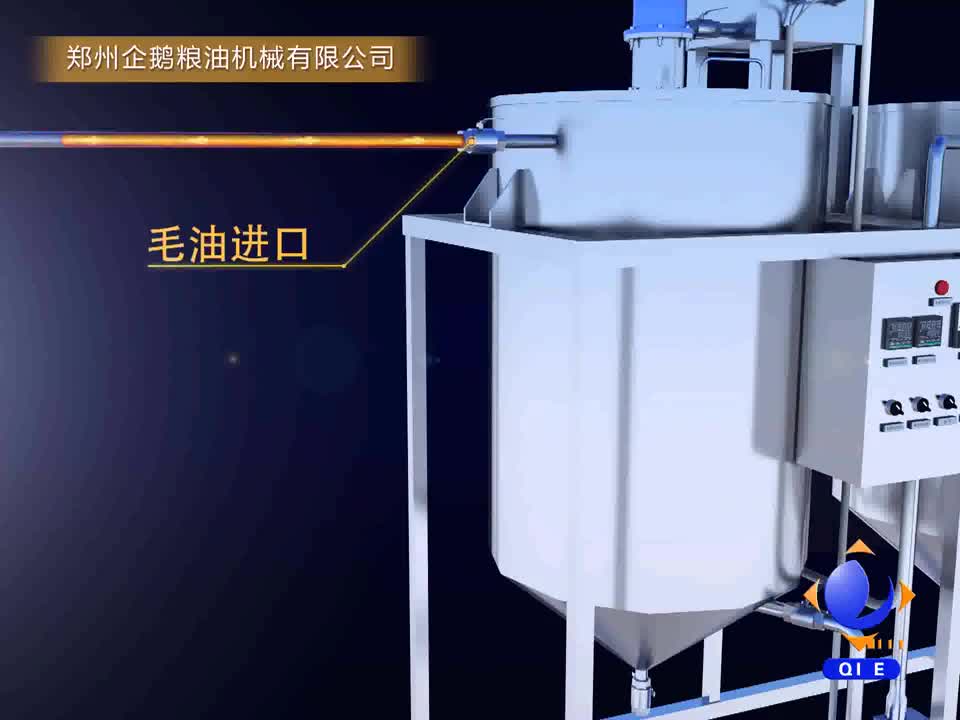
Water degumming works because hydratable phospholipids absorb water, swell, and form separable gum phases. Your job is to hydrate fully without creating stable emulsions. In production, most “degumming failures” are not due to “bad oil”—they’re caused by mismatched water dosage, temperature, and shear.
| Control Item | Typical Range | Why It Matters (Cause → Effect) | If You Miss It |
|---|---|---|---|
| Water addition | 0.8–2.5% (w/w of oil) | Enough water → phospholipids fully hydrate → gums separate cleanly | Too low: residual P, haze; Too high: emulsion, oil loss |
| Water temperature | 70–85°C (hot water) | Warm water reduces viscosity and speeds hydration kinetics | Cold water: slow hydration, incomplete separation |
| Oil temperature | 75–90°C | Higher temperature → lower viscosity → better mass transfer | Too high: stable emulsions, higher oxidation risk |
| Mixing intensity | Moderate shear; 10–20 min | Sufficient dispersion of water → full contact with phospholipids | Too strong/too long: emulsion, hard-to-break gum |
| Holding time | 10–30 min | Time for swollen gums to agglomerate before separation | Too short: high residual gums; too long: temperature drift |
| Separation | Centrifuge preferred | Rapid separation prevents re-dispersion | Gravity settling often unstable for high-gum cottonseed |
High shear + excess water + elevated temperature is the classic emulsion triangle:
If you see persistent haze after separation, don’t immediately blame the centrifuge. First, reduce mixing intensity/time and bring water dosage back toward 1.0–1.5%, then re-check gum phase clarity.
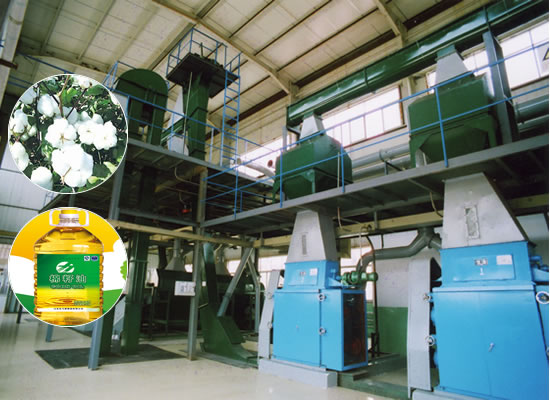
Bleaching is adsorption. You are not “painting the oil lighter”—you are removing pigments, trace metals, soaps, and oxidation by-products. Cottonseed oil can show stubborn color bodies, so your adsorption media and temperature control decide whether you get stable light color or “looks good today, turns tomorrow.”
| Adsorbent | Best At | Typical Dosage | Trade-Offs |
|---|---|---|---|
| Activated bleaching earth (clay) | General color reduction, soaps, metals, polar impurities | 0.5–1.5% (w/w) | Overdose raises oil loss, filtration load; can increase AV if water/heat mismanaged |
| Activated carbon | Deep removal of certain pigments/odor precursors, trace contaminants | 0.05–0.30% (w/w) | Can darken filter cake, higher cost, needs good filtration setup |
| Clay + Carbon blend | Stubborn cottonseed color bodies + stability improvement | Clay 0.6–1.2% + Carbon 0.05–0.15% | Requires tighter vacuum/oxygen control to avoid oxidation |
The common misconception is that “higher temperature bleaches better.” In reality, overheating and oxygen exposure can accelerate oxidation and increase free fatty acid formation in sensitive systems—especially when moisture remains or when clay is overdosed.
Here’s a typical pattern seen in cottonseed oil lines: the refined oil AV starts trending upward, even though caustic neutralization “looks normal.” You test and find the real issue was upstream: unstable degumming created residual gums and micro-emulsions, which carried into bleaching and increased oil retention and hydrolysis risk.
The takeaway is not “use these exact numbers.” The takeaway is the logic chain: control hydration to avoid micro-emulsions → reduce carryover → bleaching becomes predictable → AV stays under control without over-correcting with caustic.
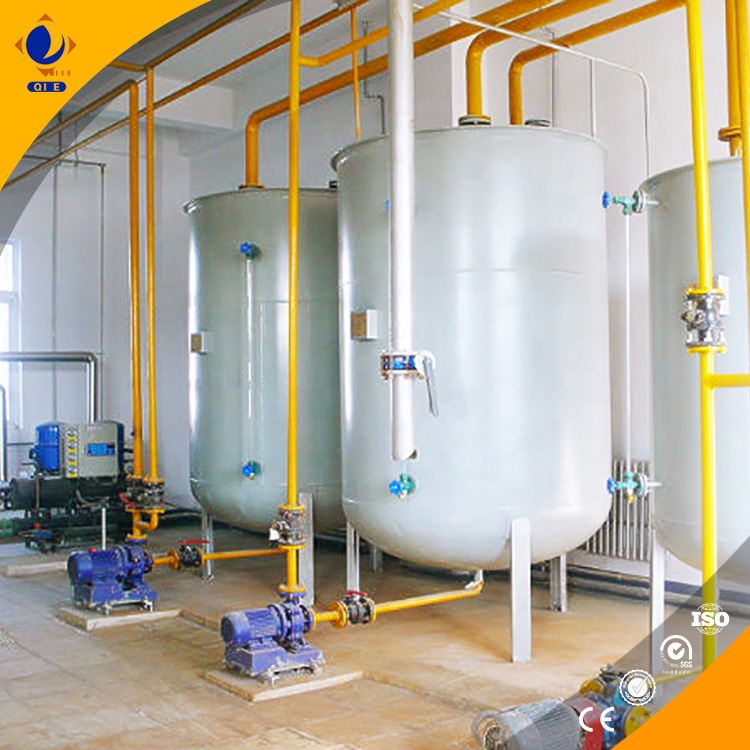
If you want stable cottonseed oil quality, you need a routine that operators can follow even on busy shifts. The simplest working principle is: measure what changes first. AV and final color are “late signals.” Turbidity, separation behavior, and filtration ΔP are early warnings.
| Step | What You Record (each batch) | Target / Trigger | Action If Out |
|---|---|---|---|
| Degumming | Oil temp, water %, mixing time, visual phase clarity, centrifuge discharge behavior | Clear oil phase; stable gum discharge; no “milkiness” | Reduce shear/time; step down water by 0.2–0.3%; re-check temps |
| Bleaching | Vacuum (mbar), temp, contact time, clay/carbon %, filtration ΔP trend | Vacuum ≤ 50 mbar; stable ΔP rise rate | Check vacuum leaks; reduce clay; verify degumming performance |
| QC—Color | L*, a*, b* at same temperature; sample handling notes | Trend stability; alarm on sudden b* increase | Review clay type/dose and oxygen exposure (vacuum) |
| QC—Turbidity | Turbidity value or standardized haze test (hot/cold) | No haze growth after cooling test | Improve degumming separation; check residual soaps |
| QC—Acid Value | AV (mg KOH/g), sampling time vs process step | AV ≤ 0.5 (typical internal spec) | Don’t over-correct first; trace back to degumming/bleaching moisture & oxidation |
You likely removed pigments, but created new color/oxidation precursors through oxygen exposure or excessive thermal history. Re-check vacuum integrity, reduce unnecessary contact time, and ensure degumming is clean. Color rebound often means you treated a symptom, not the cause.
Hydrated gums behave like emulsifiers. Once you cross a shear threshold, you generate droplet sizes that remain suspended longer than your separator’s ability to split phases. You can fix this faster by reducing shear/time than by adding more water.
No. More water doesn’t mean more removal once phospholipids are hydrated. After the hydration point, extra water mainly increases emulsion risk and oil carryover. For many cottonseed crude oils, a controlled band around 1.0–1.6% is often more stable than “max water.”
If your main issue is general color plus soaps/polar impurities, start with activated clay optimization. If you face stubborn color bodies or odor precursors that clay cannot stabilize, introduce a low-dose carbon blend and watch filtration and L*a*b* stability—not just initial color drop.
If you’re upgrading a cottonseed oil refining line or troubleshooting quality fluctuations, a process-matched setup makes the difference: stable hydration degumming, reliable bleaching under vacuum, and filtration that doesn’t become your bottleneck. When the system is tuned correctly, you can realistically reduce scrap/rework by 30%+ and keep every batch consistently on-spec.

 407
|
407
|
 palm kernel oil purification
centrifugal separation optimization
oil refining parameters
emulsion prevention in oil processing
industrial centrifuge settings
palm kernel oil purification
centrifugal separation optimization
oil refining parameters
emulsion prevention in oil processing
industrial centrifuge settings
 329
|
palm kernel crushing machine
industrial crusher selection
palm kernel oil processing
crusher maintenance tips
crushing particle size optimization
329
|
palm kernel crushing machine
industrial crusher selection
palm kernel oil processing
crusher maintenance tips
crushing particle size optimization
 38
|
Cottonseed Oil Extraction Machinery
Cottonseed Oil Processing Equipment
Cottonseed Oil Press
Cottonseed Oil Refining Machinery
Cottonseed Oil Extraction Process
Cottonseed Oil Pressing Equipment
Cottonseed Oil Production Technology
Cottonseed Oil Production Machinery
Cottonseed Oil Extraction Technology
38
|
Cottonseed Oil Extraction Machinery
Cottonseed Oil Processing Equipment
Cottonseed Oil Press
Cottonseed Oil Refining Machinery
Cottonseed Oil Extraction Process
Cottonseed Oil Pressing Equipment
Cottonseed Oil Production Technology
Cottonseed Oil Production Machinery
Cottonseed Oil Extraction Technology
 264
|
rice bran oil refining process
degumming equipment selection
deacidification techniques
bleaching adsorbents
deodorization steam distillation
264
|
rice bran oil refining process
degumming equipment selection
deacidification techniques
bleaching adsorbents
deodorization steam distillation
 209
|
seed pretreatment and pressing equipment
efficient vegetable oil production solutions
customized seed processing technology
209
|
seed pretreatment and pressing equipment
efficient vegetable oil production solutions
customized seed processing technology






.jpg?x-oss-process=image/resize,m_fill,h_300,w_300/format,webp)

.jpg)