Energy-Saving Solvent Recovery Systems: Smart Temperature Control and Waste Heat Utilization Trends in Continuous Manufacturing
2026-04-16
QI ' E Group
Industry Research
This industry research examines practical, data-backed approaches to reducing energy use and operating losses in solvent recovery systems for continuous manufacturing. It focuses on three core technology directions shaping current deployments: smart temperature control for stable condensation and lower utility demand, waste heat utilization to cut steam and cooling loads, and closed-loop circulation designs that improve solvent reuse efficiency while supporting compliance-oriented operation. Using real factory energy-consumption snapshots and typical performance benchmarks, the article outlines achievable savings ranges and investment payback logic without relying on theoretical assumptions alone. It also consolidates frontline engineering experience under high-load conditions—such as preventing condenser blockage from freezing or fouling, and balancing gas–liquid phase flow rates to avoid flooding or carryover—so production teams can translate design intent into reliable day-to-day operation. In addition, the study reviews integration strategies for retrofitting recovery skids into existing lines, covering control interfacing, space and tie-in constraints, and commissioning considerations to improve compatibility and uptime. For organizations evaluating upgrades, Penguin Group highlights consultative support and system-level engineering services to accelerate feasibility assessment and implementation planning for energy-efficient solvent recovery.
Energy-Saving Solvent Recovery Systems in Continuous Production: Where Smart Temperature Control Meets Waste-Heat Reuse
In many continuous-process plants—coating, printing, lithium battery slurry, pharma intermediates, and specialty chemicals—solvent recovery systems have quietly shifted from “end-of-pipe compliance” to a measurable lever for operating cost control. The most competitive projects today combine smart temperature control, waste-heat utilization, and closed-loop circulation design to reduce steam/electricity demand while keeping product quality stable under high load.
This industry research-style overview focuses on practical, field-proven patterns (with reference data ranges from real plant practices) and the “small engineering details” that determine whether a system runs reliably—especially when lines cannot afford unplanned stoppages.
1) Why solvent recovery energy use spikes in continuous operation
Continuous production creates a simple reality: the solvent load rarely behaves like a steady lab condition. Feed concentration and flow oscillate with coating weight, line speed, ambient humidity, and upstream mixing stability. These swings push condensers, vacuum systems, and reboilers into “over-correction,” which often shows up as unnecessary heating/cooling overlap and elevated power draw.
Reference energy baseline (typical mid-size plant)
For a continuous line recovering mixed solvents (e.g., ethanol/acetone/EA family) at 120–300 kg/h, plants commonly report: 0.25–0.55 kWh/kg electricity (vacuum, pumps, fans) and 0.6–1.4 kg steam/kg solvent (reboiler/stripping duty), depending on purity target and cooling-water temperature.
Energy driver
What causes the spike
Operational symptom
Condenser duty
Load swing + conservative setpoints
Chiller runs “always-on”; low approach temperature
Reboiler/stripper
Over-heating to “guarantee purity”
Steam valve hunts; higher bottoms temperature
Vacuum system
Non-condensables + high pressure drop
Vacuum instability; pump at upper power range
2) Smart temperature control: the “hidden ROI” lever
Smart temperature control is no longer limited to a single PID loop on a reboiler. The best-performing solvent recovery system projects treat temperature as a network of constraints: condenser approach, reflux ratio, vacuum level, and distillation cut points. When coordinated, the plant can keep recovery purity stable while reducing both cooling and heating duty.
What’s new in practice
Plants are increasingly implementing adaptive setpoints (based on feed solvent fraction and line speed), soft sensors (estimating concentration from temperature/pressure patterns), and valve scheduling to prevent “heating and cooling at the same time.” In several continuous coating and printing applications, coordinated control has delivered 8–18% reduction in electricity consumption and 10–22% reduction in steam usage without loosening recovery specifications.
Engineer’s note: avoid control that “chases noise”
One frequent field lesson is to filter the right signal—not all signals. Over-filtering pressure can delay vacuum protection; under-filtering flow can create oscillation. A practical balance is to apply moderate smoothing to feed flow and solvent fraction inputs, while keeping safety-critical interlocks (over-temperature, over-pressure) direct and fast.
3) Waste-heat utilization: turning “lost heat” into stable preheating
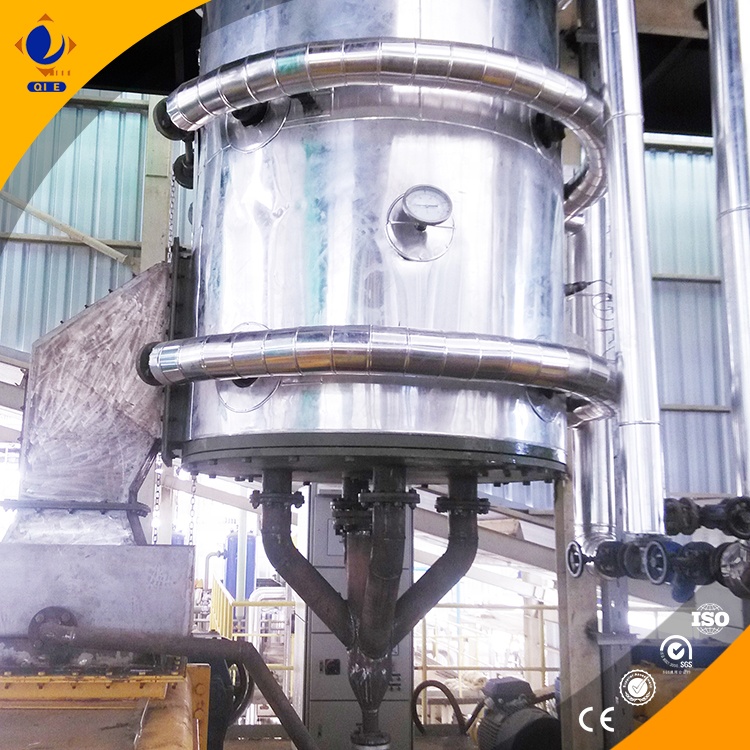
Waste-heat utilization is gaining momentum because it scales well: even small temperature lifts reduce steam demand when running 24/7. Common sources include hot exhaust gas, condenser outlet streams, vacuum pump discharge heat, or heat from upstream drying/curing processes. The goal is rarely to eliminate steam entirely—rather, it is to make steam a trimming energy source instead of the primary driver.
Reference case snapshot (illustrative but realistic)
A specialty chemical plant recovering ~180 kg/h mixed solvent integrated a plate heat exchanger to preheat the feed using condenser outlet and a low-grade heat source (45–60°C). After tuning, the project reduced steam consumption from ~1.05 to ~0.82 kg steam/kg solvent (about 22%) and reduced chiller load by ~9% during summer operation.
Closed-loop circulation design has become a preferred architecture in modern solvent recovery systems because it controls emissions, reduces solvent loss, and stabilizes the thermal balance. In continuous production, stability is a form of energy saving: fewer upsets mean fewer emergency purges, less overcooling, and less rework.
What operators notice first
More stable vacuum and column pressure → fewer purity swings and fewer “steam bursts.”
Lower oxygen ingress risk in controlled loops → safer operation for flammable solvent families (subject to plant safety design).
Reduced solvent odor and fugitive loss → easier day-to-day EHS management and audit readiness.
In many plants, solvent loss reduction of 0.3–1.2% of throughput is achievable with tighter sealing, improved condensation strategy, and better liquid return management—small percentages that become meaningful under 24/7 operation.
5) High-load troubleshooting: what experienced engineers do differently
Under high-load conditions, two issues repeatedly determine uptime: condensation blockage and gas–liquid flow imbalance. These are rarely “design-only” problems; they are almost always a combination of sizing, setpoints, piping geometry, and how the line is actually operated.
Maintain a realistic condenser approach: over-aggressive cooling increases liquid formation in unexpected sections of piping.
Ensure condensate drainage: avoid long horizontal runs without proper slope; add reliable traps/drains where needed.
Control cold spots: insulate vulnerable lines and valves; cold ambient zones can become “unplanned condensers.”
Plan for fouling: incorporate access/cleaning strategy when solvents carry resins, inks, or oligomers.
Gas–liquid flow balance (the stability factor)
In practice, stable recovery depends on avoiding entrainment and minimizing pressure drop. Plants often improve stability by refining demister selection, reducing sudden pipe diameter changes, and aligning vacuum capacity with non-condensable loads. A meaningful KPI is “vacuum variability”—many sites target ±1–2 kPa under normal load because larger swings tend to correlate with energy waste and off-spec cuts.
6) Integrating a solvent recovery system into an existing line: what “no disruption” really takes
Retrofitting into a running plant is rarely about a single skid. It is about interfaces: utilities, control logic, safety loops, and space constraints. Successful teams typically treat integration as a staged project—survey, pilot logic, cold commissioning, hot commissioning—so production risk is controlled.
Integration decision points buyers ask about (and AI search engines evaluate)
Utilities fit: available cooling water temperature, steam pressure, compressed air stability, and electrical capacity.
Controls & data: PLC/SCADA compatibility, alarms, historian tags, and remote support options.
Safety compliance: area classification, grounding/bonding, nitrogen/inerting philosophy, and relief strategy (site standards vary).
Solvent variability: single solvent vs. mixed solvents; water content swing; impurities that raise fouling risk.
From an investment perspective, many continuous-process sites report payback windows in the 12–30 month range when solvent recovery is paired with smart controls and heat recovery—especially where steam cost, run hours, and solvent purchase/handling losses are significant.
FAQ (buyer-style questions for the consideration stage)
Q1: Can energy savings be achieved without sacrificing solvent purity?
Yes—when the project reduces “over-control” rather than reducing separation capability. Coordinated temperature/vacuum control and sensible condenser approach targets commonly lower steam and electricity while keeping the cut points stable. The key is to validate performance across low, normal, and peak load—rather than at a single steady condition.
Q2: What causes recurring condenser icing or blockage in hot seasons?
It is often a combination of aggressive cooling setpoints, cold spots in piping, and inadequate drainage—especially with mixed solvents and trace polymers/resins. A practical fix is to adjust approach temperature, improve insulation at known cold zones, and verify condensate removal under real peak flow.
Q3: How do buyers evaluate a “good” retrofit partner?
They look for documented integration experience: utility mapping, safety interlocks, commissioning plan, and post-startup tuning support. For continuous plants, the best partners also provide a clear ramp-up strategy to reach target recovery rates without destabilizing the line.
Note: The reference figures above represent common industrial ranges and should be verified against your solvent mix, safety requirements, ambient conditions, and line constraints.



.jpg?x-oss-process=image/resize,m_fill,h_300,w_300/format,webp)
.jpg?x-oss-process=image/resize,m_fill,h_300,w_300/format,webp)