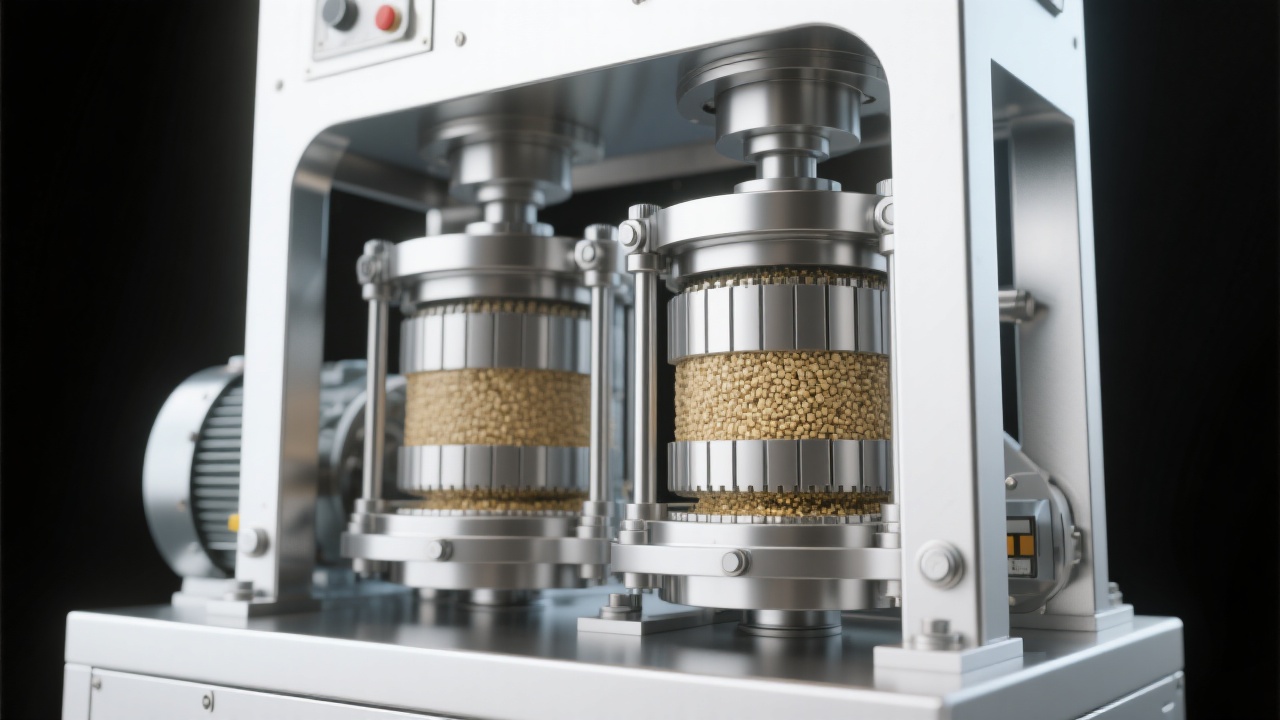
Centrifugal separation is a key technology in the palm kernel oil purification process. The fundamental principle behind it is the difference in density among oil, water, and solid phases. When a mixture of palm kernel oil, water, and solids is placed in a centrifuge, the centripetal force generated by high - speed rotation causes substances with different densities to separate. The denser solid phase moves towards the outer edge, the water phase settles in the middle, and the lighter oil phase accumulates at the center. This process can be better understood with the help of the following diagram:
[Here could be a diagram showing the density - based separation process]
By leveraging this density - based separation, centrifuges can effectively layer and separate the different components in palm kernel oil, which is crucial for obtaining high - quality palm kernel oil.
There are mainly two types of centrifuges used in palm kernel oil purification: decanter centrifuges and disc centrifuges. Let's compare them from the aspects of processing capacity, energy consumption, and maintenance to recommend suitable scenarios.
| Centrifuge Type | Processing Capacity | Energy Consumption | Maintenance | Suitable Scenarios |
|---|---|---|---|---|
| Decanter Centrifuge | High, suitable for large - scale production | Relatively high | More complex, requires regular inspection of screw conveyor | When dealing with high - solid - content palm kernel oil or large - volume production |
| Disc Centrifuge | Moderate, can handle medium - scale production | Relatively low | Relatively simple, mainly cleaning the discs | For palm kernel oil with low solid content and when high - precision separation is required |
Let's take a Southeast Asian palm kernel oil exporter as an example. This exporter was facing challenges with high oil content in residues and relatively low oil purity. By making fine - tuned adjustments to the centrifuge parameters, including the rotation speed, feed rate, and temperature, significant improvements were achieved.
Initially, the residue oil content was relatively high. After a series of parameter optimizations, the residue oil content decreased by 15%, and the oil purity increased to over 98%. These adjustments were not made randomly. The exporter first analyzed the characteristics of their palm kernel oil, then gradually adjusted the parameters based on the centrifuge's operating manual and experience. For example, increasing the rotation speed can enhance the separation effect, but it also needs to be balanced with the feed rate to avoid overloading the centrifuge.
One of the common problems in palm kernel oil purification is oil - water emulsification. This problem can lead to inefficient separation and reduced oil quality. Here is a three - step troubleshooting method:
The palm kernel oil centrifugal purification equipment industry is witnessing several trends. Intelligent control is becoming a new standard. With intelligent control systems, centrifuges can automatically adjust parameters according to the real - time status of the oil, improving production efficiency and stability. Energy - saving design is also a key trend. Manufacturers are developing centrifuges with lower energy consumption to reduce production costs for enterprises.
Are you facing challenges with unstable oil purity or high oil content in residues in your palm kernel oil production? Click here to learn about solutions from your peers!
Q: What is the most suitable centrifuge for small - scale palm kernel oil production?
A: For small - scale production, a disc centrifuge is usually a better choice due to its moderate processing capacity, low energy consumption, and relatively simple maintenance.
Q: How often should I maintain my centrifuge?
A: It depends on the usage frequency and the type of centrifuge. Generally, regular inspections should be carried out every few months, and major maintenance should be done at least once a year.

 38
|
38
|
 Customizable Palm Oil Processing Line
Palm Kernel Oil Production Line Equipment
Advanced Technology Application
Diverse Production Requirements
Oil Palm Processing Enterprises
Customizable Palm Oil Processing Line
Palm Kernel Oil Production Line Equipment
Advanced Technology Application
Diverse Production Requirements
Oil Palm Processing Enterprises
 60
|
Niger Seed Oil Extraction Machinery
High-Quality Niger Seed Oil Equipment
Efficient Niger Seed Oil Production
Automated Niger Seed Oil Extraction
Durable Niger Seed Oil Machinery
Niger Seed Oil Pressing Equipment
Niger Seed Oil Refining Machines
Niger Seed Oil Filtration Equipment
Energy Saving Niger Seed Oil Machinery
60
|
Niger Seed Oil Extraction Machinery
High-Quality Niger Seed Oil Equipment
Efficient Niger Seed Oil Production
Automated Niger Seed Oil Extraction
Durable Niger Seed Oil Machinery
Niger Seed Oil Pressing Equipment
Niger Seed Oil Refining Machines
Niger Seed Oil Filtration Equipment
Energy Saving Niger Seed Oil Machinery
 159
|
efficient vegetable oil extraction technology
high-yield solvent extraction systems
customized vegetable oil production solutions
159
|
efficient vegetable oil extraction technology
high-yield solvent extraction systems
customized vegetable oil production solutions
 439
|
seed preprocessing technology for oil extraction
efficient plant oil production solutions
versatile oilseed processing line
439
|
seed preprocessing technology for oil extraction
efficient plant oil production solutions
versatile oilseed processing line
 319
|
["rice bran oil extraction equipment"
"solvent extraction system"
"rice bran oil processing"
"equipment maintenance solutions"
"oil refining technology"]
319
|
["rice bran oil extraction equipment"
"solvent extraction system"
"rice bran oil processing"
"equipment maintenance solutions"
"oil refining technology"]





.jpg?x-oss-process=image/resize,m_fill,h_300,w_300/format,webp)
.jpg?x-oss-process=image/resize,m_fill,h_300,w_300/format,webp)