Grain and oil processing equipment is selected according to the oilseed, production method, required capacity, finished-oil specification and plant operating conditions. A complete processing project may combine seed preparation, mechanical pressing, solvent extraction, filtration, storage, packaging and edible oil refining.
As a B2B supplier of oil processing machinery, Qi'e Grain and Oil Machinery Co., Ltd. supports processors in evaluating equipment configurations for oil mill projects, including applications such as mustard oil extraction. The objective is to build a practical process route around the available raw material and the intended market—not simply to add equipment stages.
Oil processing equipment performs distinct functions from raw-seed intake through to finished-oil handling. Some projects require a compact pressing section, while larger or more specialized operations may require integrated extraction and refining systems. The equipment below forms the main functional categories used in edible oil production.
Seed cleaning equipment removes stones, dust, metal fragments and other foreign matter before processing. Cleaner incoming material helps protect downstream machinery and supports more consistent oil production.
Typical equipment: seed cleaners and related material-cleaning units.
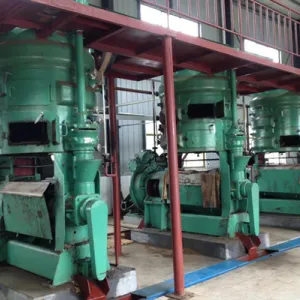
Mechanical oil presses use pressure to release oil from prepared oilseeds. Screw presses are commonly used in oil pressing operations and can be configured within standalone or production-line systems.
Typical applications: mustard seed, soybean, sunflower seed and other oil-bearing materials, subject to process design.
Cooking or conditioning equipment heats prepared seed before pressing when a hot-press process is selected. This stage is used to support pressing performance and is not required for every production method.
Typical equipment: cooking kettles with heating arrangements.
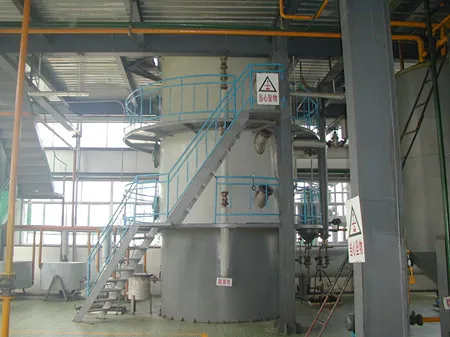
Solvent extraction systems use an extraction solvent to recover oil from oilseed material. These systems are generally more process-intensive and require appropriate equipment for solvent handling and removal.
Key consideration: solvent extraction should be planned with process controls, safety requirements and residue-management needs in mind.
Freshly extracted oil may contain suspended solids. Filtration equipment removes solid particles, while storage tanks provide a controlled point for holding filtered oil before further processing or packaging.
Typical equipment: plate filters, pressure leaf filters and oil storage tanks.
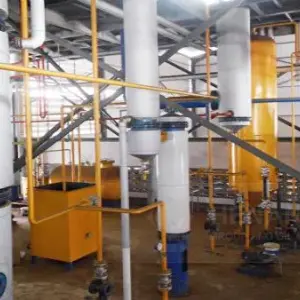
Edible oil refining equipment is used when the project requires additional treatment of crude oil. The refining configuration should be determined by the raw oil characteristics, target quality requirements and applicable market or food-processing standards.
Typical application: refining sections integrated with an edible oil production line.
Cold pressing, hot pressing and solvent extraction are different process approaches. The most suitable option depends on the desired product characteristics, production scale, equipment scope and operational requirements.
| Process Method | Basic Process | Main Consideration | Relevant Equipment |
|---|---|---|---|
| Cold pressing | Cleaned seed is pressed at a lower processing temperature. | Often selected where preservation of natural flavor and oil characteristics is important. | Seed cleaner, oil press, filter, storage tank. |
| Hot pressing | Seed is cleaned, heated or cooked, then mechanically pressed. | Uses a heating stage before pressing and may be considered for throughput and extraction performance. | Seed cleaner, cooking kettle, screw press, filter. |
| Solvent extraction | Prepared material is treated with solvent to extract oil, followed by solvent removal. | Requires a more complex system and careful consideration of process, safety and compliance requirements. | Extraction system and associated solvent-removal process equipment. |
Mustard oil extraction begins with mustard seed preparation and continues through pressing or extraction, oil clarification and storage. Mustard oil is widely used for cooking, particularly in South Asian cuisine. Process selection should reflect the intended oil profile, local raw-material supply, planned capacity and market requirements.
Equipment selection is most reliable when it starts with production requirements rather than with an individual machine model. The following factors help define the appropriate processing scope.
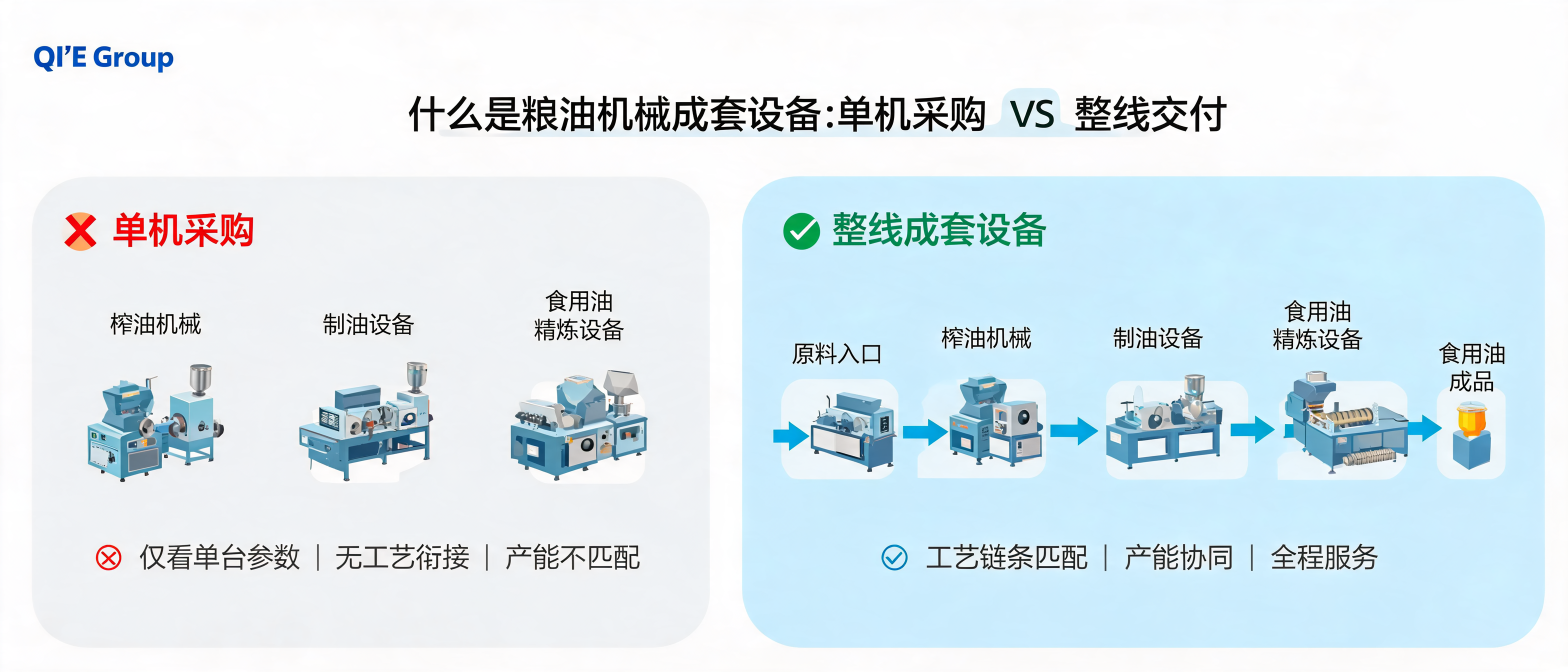
An oil mill can be developed as a focused pressing operation or as a broader edible oil production line. A smaller project may center on cleaning, pressing, filtering and storage. A larger configuration can connect preparation, pressing or solvent extraction, refining and packaging stages into a coordinated material flow.
Process principle: each equipment section should have a clear function within the production route. Matching capacity between cleaning, pressing, filtration, storage and packaging sections helps support orderly operation.
Qi'e Grain and Oil Machinery Co., Ltd. develops and supplies oil pressing equipment, oil production line equipment and edible oil refining equipment for grain and oil processing projects. Its equipment scope can support process stages including seed cleaning, pressing, extraction, filtration, oil storage and packaging.
For mustard oil extraction or other edible oil applications, a well-defined project brief—including oilseed type, target capacity, process preference, site conditions and finished-oil requirements—provides the foundation for evaluating a suitable equipment solution.
 258
|
 mustard seed oil degumming phospholipid removal degumming tank oil refining process residual phosphorus control
 355
|
supercritical CO2 extraction walnut oil extraction low temperature preservation green oil extraction high-end edible oil technology
206
|
mustard seed oil pre-treatment process mustard seed cleaning and drying moisture control for oil pressing screw press oil extraction optimization mustard seed crushing parameters
 58
|
Qi'e Grain and Oil Machinery Co., Ltd. oil press maintenance edible oil production line maintenance oil mill equipment servicing equipment operation management
 278
|
mustard seed oil refining equipment degumming tank design deacidification tank maintenance bleaching tank structure deodorization tower automation