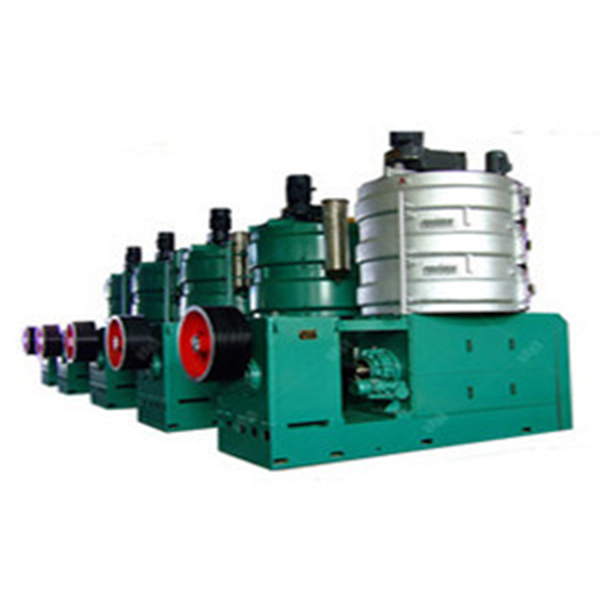
For farms processing their own sunflower seeds and small-batch producers, choosing a manual sunflower oil extractor starts with the amount of seed to process, the labor available and the frequency of operation—not an advertised oil-yield figure alone.
A suitable machine should deliver a manageable working rate, provide documented food-contact materials and allow safe operation and practical cleaning. Qi'e Grain and Oil Machinery Co., Ltd. recommends evaluating equipment against confirmed model specifications and a trial using your own sunflower seeds before deciding whether manual, semi-automatic or electric processing is appropriate.
A manual sunflower oil extractor uses operator-supplied mechanical force to press oil from prepared sunflower seeds. A strainer separates particles from liquid; it does not, by itself, provide the pressure needed to extract oil from intact seeds.
Equipment descriptions may use “manual” to refer to hand-powered pressing, manual feeding or manual adjustment. These are different operating arrangements. Ask the supplier to identify exactly which functions require human effort and which require electricity.
Do not assume that a hand-powered machine is automatically suitable for cold pressing. Confirm the actual pressing temperature and the applicable requirements for any cold-pressed product claim.
Start with the mass of sunflower seed you need to process each day and the operator time available. Your working schedule must accommodate preparation, feeding, pressing, rest breaks, clearing interruptions, oil collection and cleaning.
| Selection factor | What to confirm | Why it matters |
|---|---|---|
| Daily seed volume | Typical batch size and peak processing requirement | Defines the workload the machine must handle |
| Available labor | Operator numbers, working time and sustainable effort | Hand-powered throughput depends on the operator as well as the machine |
| Operating frequency | Occasional batches or regular daily production | Influences the suitability of manual operation and maintenance planning |
| Continuous-use limits | Permitted operating duration and required pauses | A short demonstration may not represent a full working session |
| Total operating cost | Labor, preparation, filtration, maintenance and replacement parts | Purchase price alone does not show the cost of producing usable oil |
Required average processing rate = daily seed input ÷ available processing hours. Use this as an initial screening calculation, then check whether the demonstrated working schedule includes sufficient time for non-pressing tasks.
Review the machine’s mounting method, stability, handle clearance and access to moving parts. During a trial, observe whether the operator can maintain the required pace without excessive strain. Request instructions for stopping, clearing blockages and safely dismantling the press. If heating or powered accessories are included, assess their additional hazards and operating requirements.
Ask for material information covering the seed-contact components, pressing chamber, oil outlet and collection surfaces. Confirm that relevant documentation applies to the proposed model and intended market. Appearance or a general “food-grade” description is not a substitute for identifying the materials and their suitability.
Check how residual seed material and oil are removed, which parts can be dismantled and what tools are needed. Request the cleaning procedure, lubrication requirements, wear-part list and spare-parts availability. Include cleaning and reassembly in the trial rather than evaluating pressing alone.
A meaningful sunflower oil extractor trial uses representative seeds and agreed operating conditions. Seed oil content, moisture, pretreatment and press design can affect both output and effort, so results from a different seed batch may not represent your production conditions.
Manual pressing may be worth evaluating for limited batches where operator effort and processing time are acceptable. If trials show that labor demand, interruptions or processing duration exceed your available resources, compare semi-automatic or electric alternatives.
Compare candidate machines using the same seeds, output measurement basis and working-cycle definition. Confirm the proposed configuration rather than assuming that heating, filtration, temperature control or other accessories are included.
Filtration can remove suspended seed particles, but it does not establish that extracted sunflower oil meets food-safety, storage or commercial quality requirements. It is not equivalent to refining, and a clear appearance does not confirm oil quality.
Plan suitable collection, storage and testing for the intended use and applicable local requirements. Where further treatment is needed, evaluate it separately from the extractor’s pressing performance.
Qi'e supplies oil pressing, oil production line and oil refining equipment, with design, installation and technical services. For a sunflower seed processing enquiry, provide your daily seed volume, operating frequency, available labor, electricity supply, seed condition, intended oil use and budget range.
Request confirmation of whether a suitable manual model is available or whether a powered configuration better matches your workload. Ask for model-specific specifications, material documentation, maintenance information and a seed-trial plan before making a purchase decision.
Explore Qi'e sunflower oil extraction equipment as a starting point for discussion. The final equipment choice should follow confirmed specifications and acceptance results under conditions relevant to your operation.

 253
|
 Qi'e Grain and Oil Machinery Co., Ltd. edible oil production line equipment oilseed pretreatment equipment vegetable oil pressing and extraction edible oil refining equipment
 58
|
Qi'e Grain and Oil Machinery Co., Ltd. oil press maintenance edible oil production line maintenance oil mill equipment servicing equipment operation management
 337
|
Qi'e Grain and Oil Machinery mustard oil extraction equipment mustard seed oil press machine mustard oil production line edible oil refining equipment
 171
|
Qi'e Grain and Oil Machinery Co., Ltd. grain and oil machinery solutions oil pressing production line edible oil refining equipment oil processing installation and technical services
454
|
Qi'e Grain and Oil Machinery Co., Ltd. complete grain and oil machinery set oil pressing equipment oil production line equipment edible oil refining equipment