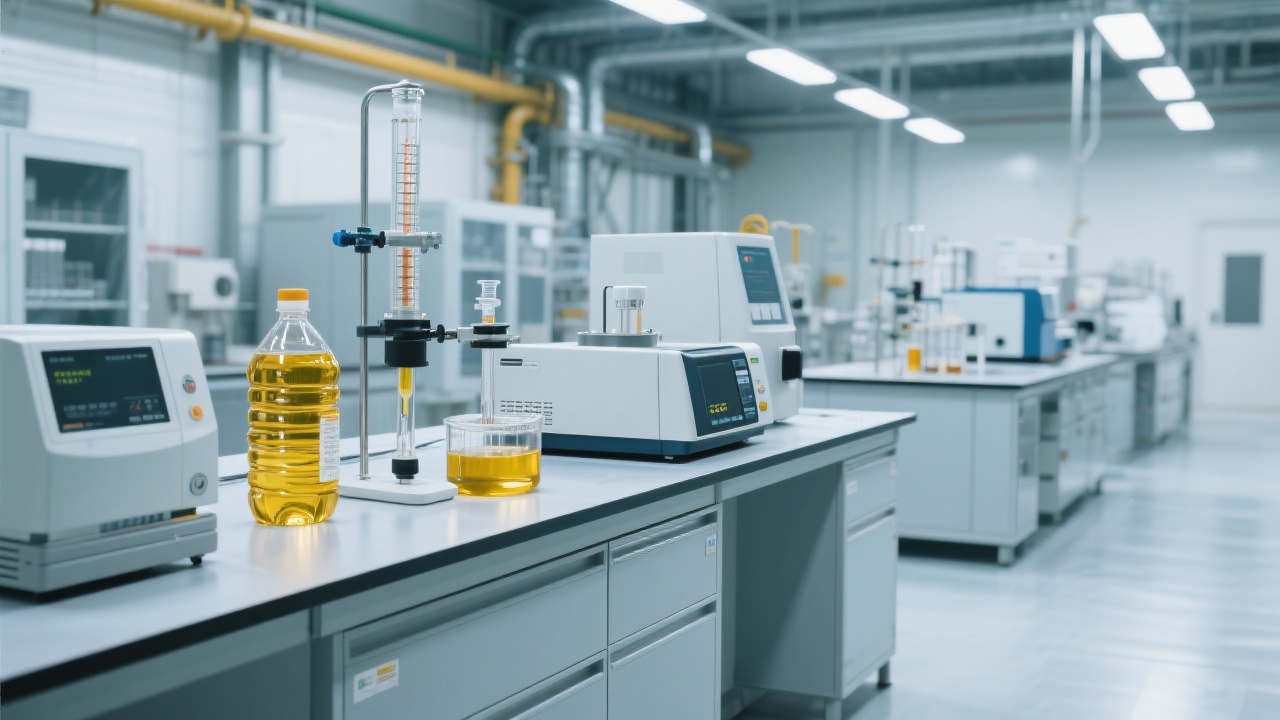
In mustard seed oil refining, degumming is not a “nice-to-have” step—it is the gatekeeper for downstream neutralization, bleaching, and deodorization. When phospholipids (gums) stay in the oil, they can trigger emulsions, filtration issues, higher refining loss, darker color, and faster oxidation. This guide explains how a degumming tank is used to remove phospholipids effectively, what parameters matter most, and how to troubleshoot common production problems—practically, not theoretically.
Crude mustard seed oil typically contains hydrated and non-hydrated phospholipids, trace metals, and mucilaginous impurities. Even when the oil looks clear at rest, gums can reappear under temperature changes or during mixing—leading to unstable product behavior.
In practical lines, degumming aims to reduce phospholipids (often tracked as phosphorus, P) from crude levels that can range around 150–350 ppm P down to: ≤ 30 ppm after effective water/acid degumming, or ≤ 10 ppm for more demanding downstream processing and better shelf stability.
Many refineries use phosphorus (ppm) as the most direct KPI for degumming efficiency, because it correlates strongly with gum carryover, soapstock formation, and bleaching earth consumption.
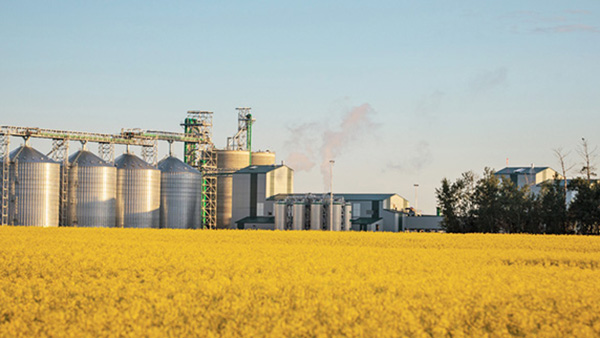
Degumming works by converting phospholipids into a separable phase. In a typical degumming tank, the process relies on controlled hydration and, when needed, acid conditioning to address non-hydratable phospholipids (NHP).
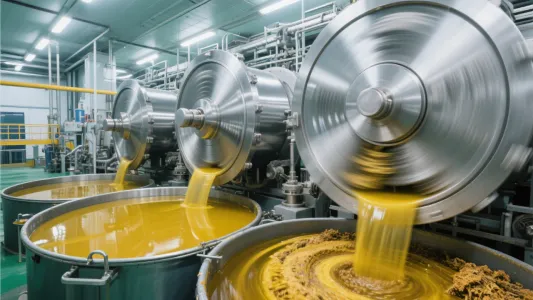
Warm water is dispersed into oil under strong mixing. Hydratable phospholipids absorb water, swell, and form gums that can be removed by centrifugation or settling (depending on the line design).
A small dose of phosphoric or citric acid converts metal-complex phospholipids into hydratable forms. This step often improves separation, reduces emulsions later, and stabilizes refining performance—especially when crude oil carries higher levels of Ca/Mg or variable seed quality.
The best degumming results are rarely achieved by “adding more water” or “mixing harder.” Stable output comes from balancing temperature, dosage, mixing shear, and retention time—then confirming with phosphorus testing.
| Parameter | Water Degumming (Typical) | Acid Degumming (Typical) | Why It Matters |
|---|---|---|---|
| Oil temperature | 70–80 °C | 75–85 °C | Improves hydration kinetics & viscosity; supports clean phase split |
| Water dosage | 1.5–3.0% | 1.0–2.5% | Too low = poor gum removal; too high = emulsions & oil loss |
| Acid dosage | — | 0.05–0.20% (as 75–85% H3PO4 equivalent) | Converts NHP; reduces Ca/Mg-related instability |
| Mixing intensity | High shear, short burst | High shear then gentle hold | Good dispersion first; then avoid re-emulsifying gums |
| Retention time | 15–30 min | 20–40 min | Ensures complete hydration/conditioning before separation |
| Target phosphorus (P) | ≤ 30 ppm | ≤ 10–20 ppm | Predicts stable neutralization & lower bleaching load |
Reference ranges are common in industrial practice and should be validated by crude oil composition, target specs, and separation equipment performance.
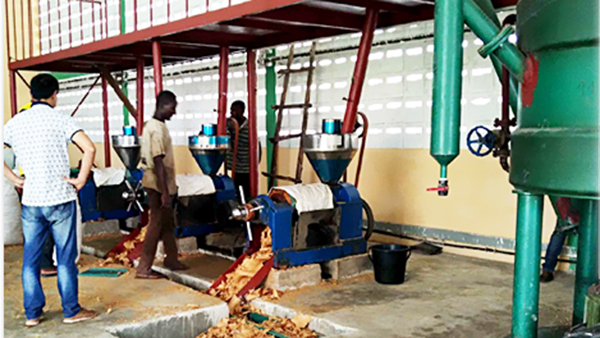
For mustard seed oil, the degumming tank is more than a holding vessel—it determines how consistently water/acid is dispersed and how predictable the separation becomes. A practical selection approach focuses on mixing quality, temperature control, residence stability, and sanitation.
Degumming performance should be judged together with the separation method (centrifuge or decanter). If the tank creates overly fine gum droplets, the separator must work harder, and phosphorus can “float” into the oil phase. The best lines tune the tank mixing profile to the actual separation capacity—rather than forcing separation to fix upstream dispersion.
Pre-heat process water (often near oil temperature). Cold water shocks viscosity and can destabilize hydration consistency, especially when crude oil quality varies day to day.
Strong dispersion at dosing is beneficial; prolonged high shear afterwards can keep gums suspended and reduce separation efficiency.
Sample after complete separation (not immediately after the tank). Otherwise, readings may reflect temporary dispersion rather than true gum removal.
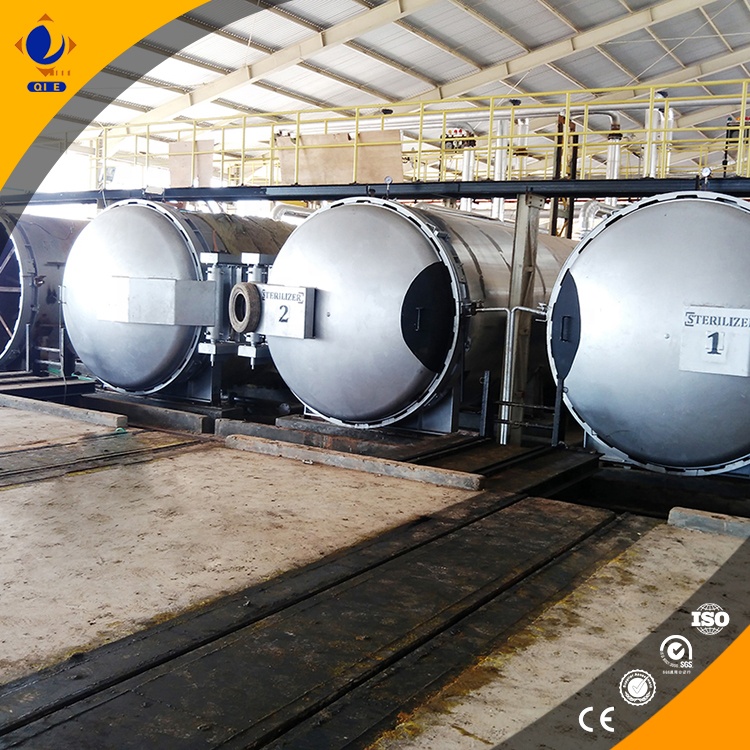
Typical causes include excessive water dosage, overly aggressive mixing throughout the hold period, or unstable temperature control.
This often indicates non-hydratable phospholipids or insufficient conditioning time.
Gum carryover can bind pigments and metals, increasing bleaching load. Improving degumming often reduces bleaching earth demand by roughly 10–25% in real operations (exact results depend on crude oil and target color).
Yes. Lower phospholipid and metal carryover typically reduces oxidative catalysts and improves downstream refining consistency, helping the oil resist haze formation and off-notes during storage.
If your crude oil shows stable low phosphorus after water degumming and separation, water-only may be enough. If phosphorus remains high or varies with seed lots, acid degumming is commonly used to handle non-hydratable gums and improve repeatability.
Many plants track: crude oil phosphorus, degummed oil phosphorus, separation clarity, centrifuge discharge dryness, and refining loss trend. Phosphorus (ppm) remains the most direct metric for degumming efficiency.
企鹅集团 helps processors align degumming tank design and operating windows with real production targets—so phosphorus reduction, separation stability, and downstream refining efficiency improve together.

 318
|
318
|
 palm kernel oil
processing line
customizable equipment
production capacity
low residual oil
advanced technology
cost-effective
palm kernel oil
processing line
customizable equipment
production capacity
low residual oil
advanced technology
cost-effective
 156
|
Sunflower oil pressing equipment
Physical pressing technology
Nutrient retention in sunflower oil
Edible oil processing technology
Press operation skills
156
|
Sunflower oil pressing equipment
Physical pressing technology
Nutrient retention in sunflower oil
Edible oil processing technology
Press operation skills
 302
|
sunflower oil pressing
physical oil extraction
oil yield optimization
nutrient retention in oils
cold press vs solvent extraction
302
|
sunflower oil pressing
physical oil extraction
oil yield optimization
nutrient retention in oils
cold press vs solvent extraction
 418
|
customizable palm oil processing line
advanced oil extraction technology
efficient production systems
418
|
customizable palm oil processing line
advanced oil extraction technology
efficient production systems
 305
|
rice bran oil refining process
refining equipment configuration for rice bran oil
degumming technology in oil refining
deodorization conditions control
oil refining efficiency optimization
305
|
rice bran oil refining process
refining equipment configuration for rice bran oil
degumming technology in oil refining
deodorization conditions control
oil refining efficiency optimization