If your amperage keeps “hunting”
You’re likely feeding variable moisture or uneven crushing. Standardize drying uniformity (±0.5%) and stabilize crusher settings before touching the press itself.

If you’re pressing mustard seed oil at scale, your output isn’t decided only by the screw press—it's largely locked in during pre-treatment. When you control cleaning, drying, and crushing with measurable parameters, you reduce mechanical losses, stabilize throughput, and protect oil quality (color, odor, and free fatty acid stability).
In industrial practice, a well-tuned pre-treatment line can realistically improve oil recovery by ~2–3% versus inconsistent moisture and high impurity feed, while also cutting press stoppages and cake oil variability. That 2–3% is often the difference between “running” and “running profitably.”
Brand note: This guide is written in the practical engineering style used by Penguin Group teams when matching raw material behavior to continuous screw press performance.
You’re not pre-treating to make the seed look better—you’re conditioning the seed so the press can build pressure consistently without slippage, choking, or re-absorption of oil. Three physical variables decide whether the screw press works in its optimal zone:
For most mustard seed pressing lines, keeping seed moisture in a controlled window (commonly 6.5–8.5%, depending on cultivar and press design) and reducing impurities below 0.5–1.0% can improve press stability and typically yields ~2–3% higher oil recovery compared with uncontrolled seasonal feed.
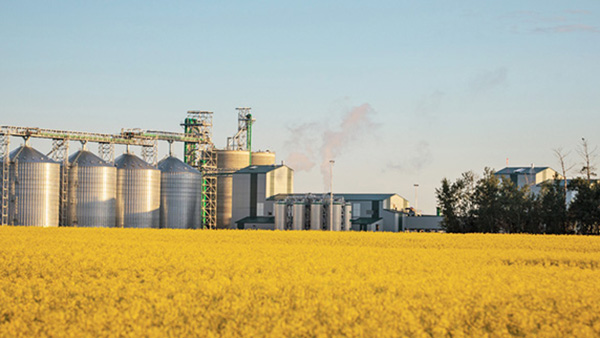
If you press uncleaned mustard seed, you’re feeding random friction into a system that depends on controlled friction. That’s why modern lines don’t treat cleaning as optional—it’s a yield and uptime tool.
| Target | Recommended Practice | Why it matters in the screw press |
|---|---|---|
| Remove heavy impurities (stones, clods) | Destoner + gravity separation | Prevents sudden barrel scoring and torque spikes |
| Remove metal | Magnetic separator before conveyors & crusher | Avoids catastrophic screw damage and downtime |
| Reduce dust and light trash | Aspirator / air screen cleaning | Improves permeability and reduces “paste” formation |
| Standardize feed size distribution | Vibratory sieve / scalper | Stabilizes compression and reduces slip |
If you’re operating in regions with mixed harvesting practices, you’ll often find that better cleaning alone reduces press maintenance frequency and lowers oil turbidity, because fewer fines and foreign materials enter the barrel.
Drying is not about making seed “as dry as possible.” It’s about hitting a moisture range that lets the press form a stable, porous cake. If moisture is too high, the material behaves like a lubricant and pressure leaks; if too low, it fractures into excess fines that clog screens and raise power consumption.
Operational signal: if you see frequent cake cracking + high fines, you likely overdried; if cake looks “glassy” and oil runs cloudy, moisture may be too high or uneven.
.jpg)
| Your condition | What you’ll observe at the press | Adjustment you should test |
|---|---|---|
| Humid/rainy season, seed arrives “soft” | Lower pressure build, higher cake oil, unstable current | Increase drying time; keep air temp moderate; add tempering to equalize moisture |
| Hot/dry season, seed brittle | More fines, screen blockage, higher power draw | Lower drying intensity; shorten drying; reduce crusher aggressiveness |
| Large day/night swings (warehouse condensation) | Batch-to-batch variability, unpredictable throughput | Improve storage ventilation; measure moisture at intake and before press; standardize feed blending |
Crushing is where you decide whether oil can actually escape under pressure. Too coarse and cells remain intact; too fine and you create a dense bed that blocks drainage through the cage. Your goal is a controlled structure that compresses evenly while still “breathing.”
For many mustard seed lines, a common target is a moderate flake/meal where most particles fall around 0.8–1.5 mm, with controlled fines (often kept below 10–15% depending on your cage/screen design).
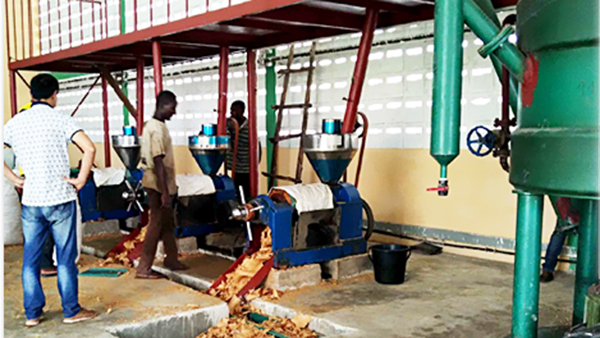
A screw press extracts oil by increasing compression along the shaft while allowing oil to drain through the cage. Pre-treatment decides whether compression becomes productive pressure—or just heat, slip, and inconsistent cake discharge.
You’re likely feeding variable moisture or uneven crushing. Standardize drying uniformity (±0.5%) and stabilize crusher settings before touching the press itself.
Check for under-crushing (intact cells) or over-moist material. Test a small shift with slightly finer structure and moisture closer to your press’s sweet spot.
You’re generating too many fines or running too dry. Reduce crushing aggressiveness and re-check final moisture—overdrying is a common hidden cause.
Traditional setups often treat cleaning and drying as “good enough,” relying on operator feel. Modern continuous lines replace guesswork with measurement, automation, and repeatability—especially when raw material changes by region and season.
| Item | Traditional approach | Modern continuous approach | Impact you’ll feel |
|---|---|---|---|
| Moisture control | Occasional checks, manual adjustments | Inline measurement + controlled drying + tempering | Higher yield stability; fewer press stops |
| Cleaning efficiency | Basic sieve only | Air screen + destoner + magnet | Less wear, cleaner oil, better uptime |
| Particle conditioning | Uncontrolled crushing, variable fines | Defined gap/mesh target + fines management | More consistent cake permeability |
| Line economics | Higher hidden losses, more rework | Continuous flow + fewer disturbances | Typically 2–3% better recovery + lower downtime cost |
If you need quick validation (without rewriting your entire process), run a controlled comparison over 1–2 shifts:
This kind of controlled trial is often enough to reveal whether your “yield problem” is actually a pre-treatment variability problem.
If you tell us your mustard seed moisture range, impurity profile, and target capacity, you can get a process map with recommended cleaning modules, drying temperature/time logic, and crushing targets—built to improve stability and oil recovery without guesswork.
Click to explore a mustard seed oil pre-treatment solution for your screw press line
 455
|
455
|
 Palm kernel oil extraction machinery
Centrifuge application
Oil - water emulsification solution
Residue oil content reduction
Palm kernel oil purification technology
Palm kernel oil extraction machinery
Centrifuge application
Oil - water emulsification solution
Residue oil content reduction
Palm kernel oil purification technology
 233
|
cottonseed oil degumming
hydration degumming parameters
phospholipid removal in cottonseed oil
cottonseed oil bleaching earth
cottonseed oil acid value control
233
|
cottonseed oil degumming
hydration degumming parameters
phospholipid removal in cottonseed oil
cottonseed oil bleaching earth
cottonseed oil acid value control
 50
|
cold pressing sunflower seed oil production
low-temperature pressing technology
premium edible oil process
cold pressing equipment selection
sunflower seed oil nutrition retention
416
|
Palm kernel oil distillation tower operation guide
Free fatty acid control
Palm kernel oil refining process
Distillation tower key parameters
Molecular distillation technology
50
|
cold pressing sunflower seed oil production
low-temperature pressing technology
premium edible oil process
cold pressing equipment selection
sunflower seed oil nutrition retention
416
|
Palm kernel oil distillation tower operation guide
Free fatty acid control
Palm kernel oil refining process
Distillation tower key parameters
Molecular distillation technology
 258
|
mustard seed oil degumming
phospholipid removal
degumming tank
oil refining process
residual phosphorus control
258
|
mustard seed oil degumming
phospholipid removal
degumming tank
oil refining process
residual phosphorus control