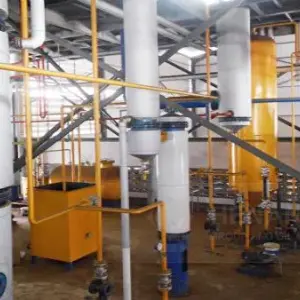
Equipment selection for an oil processing production line starts with the raw material and the intended finished-oil specification. For mustard seed oil extraction, the right configuration should connect seed preparation, pressing or extraction, oil clarification, storage, packaging, and—where required—refining into a process that matches the planned capacity, site conditions, and operating requirements.
Qi'e Grain and Oil Machinery Co., Ltd. supports B2B oil processing projects with equipment and process-oriented solutions for oil pressing, vegetable oil solvent extraction, and edible oil refining. The objective is not simply to select individual machines, but to build a coordinated production line in which each stage supports reliable material flow, product quality control, and practical operation.
Mustard oil is obtained from mustard seeds through several possible processing routes. Cold pressing, hot pressing, and solvent extraction have different operating characteristics. A suitable route should be selected according to the desired oil profile, production scale, available utilities, investment plan, and downstream refining requirements.
Cleaned mustard seeds are pressed at relatively low temperature. This approach is generally considered when retaining the oil’s natural flavor, nutritional components, and characteristic pungency is an important product objective. Compared with other methods, oil yield may be lower.
Seeds are cleaned and heated before mechanical pressing. Hot pressing can support faster extraction and a higher oil yield, while the heating stage should be controlled in line with the intended product characteristics and operating process.
Solvent extraction can be considered for projects focused on high oil recovery, particularly as part of a larger integrated oil processing line. It requires specialized extraction, desolventizing, solvent recovery, and safety-control arrangements to manage the process appropriately.
Equipment should be selected as a connected system rather than as isolated units. The following modules represent the typical functions considered when planning mustard seed oil extraction and post-processing.
| Process Stage | Typical Equipment | Selection Focus |
|---|---|---|
| Seed cleaning | Seed cleaner | Removal of stones, dust, and other foreign matter before processing. |
| Seed conditioning | Cooking kettle or heating unit | Required primarily for hot pressing; heating capability should align with the selected process route. |
| Oil extraction | Mustard seed oil press or screw oil press | Capacity, raw-material condition, pressing method, and compatibility with upstream and downstream equipment. |
| Oil clarification | Plate filter press or pressure leaf filter | Removal of solid particles and impurities from extracted oil. |
| Refining, if required | Edible oil refining equipment | The refining configuration should correspond to the intended finished-oil standard and selected production process. |
| Storage and packing | Oil storage tanks; filling and packaging equipment | Storage volume, packaging format, production rhythm, and hygiene management requirements. |
Define how much mustard seed the plant is expected to process within the planned operating period. Capacity affects machine sizing, material handling arrangements, storage requirements, utility demand, and the level of automation that may be appropriate.
A stable mustard seed supply is essential for plant planning. Seed cleanliness, moisture condition, impurity level, and seasonal supply patterns should be assessed before confirming cleaning, conditioning, pressing, and storage equipment.
The intended market position of the oil helps determine whether the line should focus on cold pressing, hot pressing, filtration, refining, or a combination of these steps. Product requirements should be established before line configuration is finalized.
The plant location should provide practical access to raw materials, water, electricity, transport, and operating personnel. Equipment layout should allow for orderly material flow, maintenance access, safety management, and future operational adjustments where feasible.
Automation should be selected according to the project scale, operating model, and control needs. The practical goal is coordinated production, consistent operation, and manageable supervision—not unnecessary system complexity.
Energy use, heating needs, ventilation, waste handling, and applicable environmental requirements should be included in early planning. Solvent extraction projects require particular attention to process control, solvent handling, and related compliance obligations.
Before establishing a mustard oil extraction plant, businesses should prepare a project budget that considers equipment, installation, utilities, labor, raw materials, and operating needs. They should also obtain the permits and licenses applicable to food processing operations in their location.
Quality control and environmental compliance are integral parts of an oil processing production line. Equipment selection should support proper cleaning, controlled processing, oil filtration, suitable storage, and responsible handling of process materials.
Qi'e Grain and Oil Machinery Co., Ltd. provides oil pressing equipment, oil production line equipment, and edible oil refining equipment for businesses planning new facilities or upgrading existing operations. For mustard seed oil processing, an effective selection process considers the relationship between seed preparation, extraction method, filtration, refining requirements, storage, and packaging.
By evaluating process requirements before equipment procurement, project teams can develop a more coherent oil processing production line configuration and create a clearer basis for installation, technical service, daily operation, and long-term maintenance.

 260
|
 rice bran residue biomass fuel calorific value analysis pelletizing process optimization biomass fuel raw materials green energy transformation
 204
|
industrial solvent recovery distillation technology membrane filtration adsorption regeneration solvent recovery maintenance
 319
|
Penguin Group grain and oil machinery equipment oil pressing machinery edible oil refining plant-level solution
 248
|
Qi'e Grain and Oil Machinery Co., Ltd. overseas grain and oil processing project equipment configuration installation and commissioning technical service
368
|
Qi'e Grain and Oil Machinery grain and oil machinery project edible oil plant construction complete equipment delivery equipment installation and commissioning