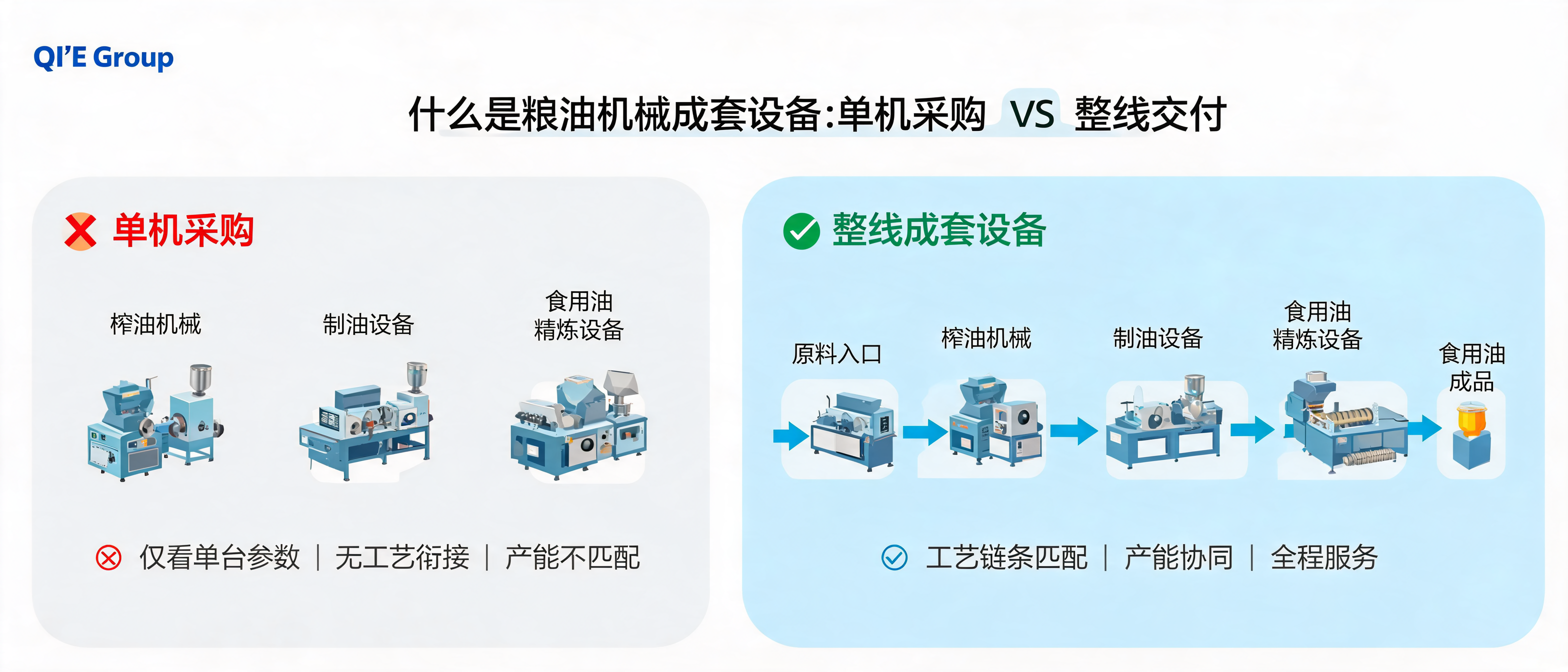
An overseas oil processing project is more than equipment procurement. Reliable production depends on how process requirements, raw material characteristics, site conditions, installation work and operator readiness are coordinated from the outset. Qi'e Grain and Oil Machinery Co., Ltd. supports oil production line projects with equipment manufacturing and delivery coordination, site installation, commissioning, training, spare-parts planning and technical service.
Oil processing machinery must work within real local conditions. Before finalizing an overseas oil production line project, the project scope should connect the intended processing capacity and product route with available utilities, building layout, logistics access and local operating practices. This preparation helps create a practical path from equipment shipment to stable production.
The project begins by clarifying the target raw material, processing steps, expected production requirements and the relationship between pressing, extraction or refining sections where applicable. This stage also identifies the project boundary: equipment supply, auxiliary systems, installation support, commissioning support and training requirements.
A workable plan considers the available factory space, utility interface points, transportation route, local climate and material flow. Site drawings and confirmed technical information provide a basis for equipment arrangement, installation preparation and coordination between the project owner and the delivery team.
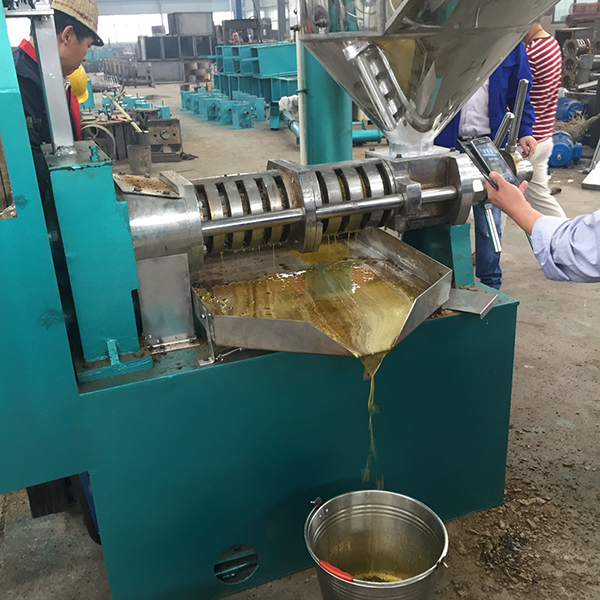
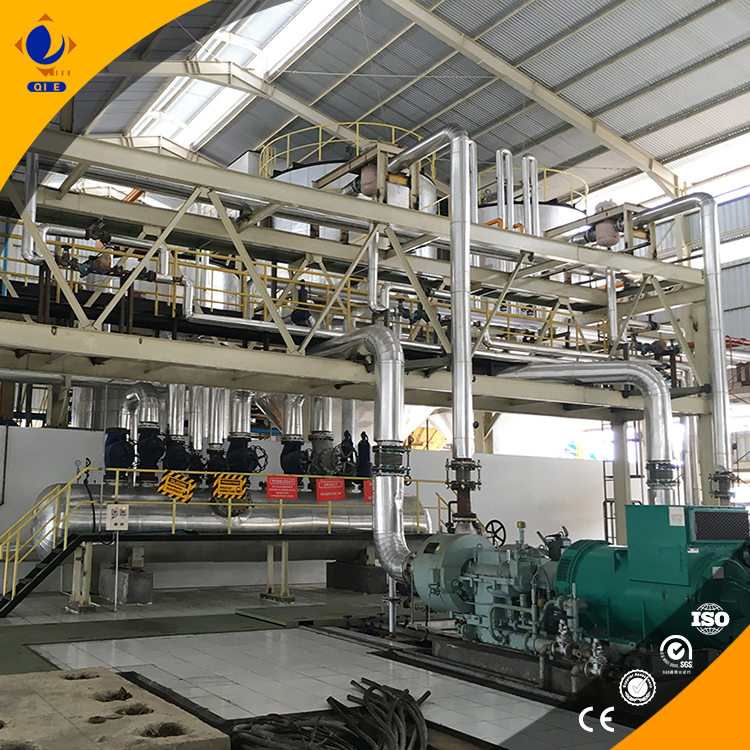
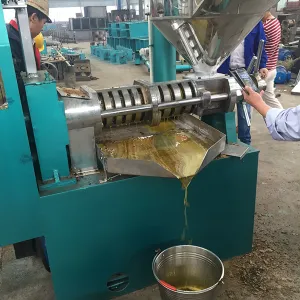
Oil pressing equipment, oil production line equipment and oil refining equipment are prepared according to the confirmed project configuration. Shipment planning should account for packing, equipment identification, documentation, transport sequence and the receiving conditions at the destination site.
After arrival, equipment should be checked against the packing and installation plan before positioning. Mechanical installation, electrical connections, piping and supporting systems need to follow the agreed layout and applicable site requirements. Clear coordination is especially important when civil, utility and mechanical work proceed in parallel.
Commissioning verifies the interaction of individual machines and the complete process flow. It typically includes inspection of mechanical movement, control functions, material conveying, utility connections and process operation. Adjustments are made according to the confirmed process requirements and conditions observed at the site.
Stable operation relies on people as well as machinery. Operator training can cover startup and shutdown procedures, routine inspection, basic adjustments, cleaning, safe operation and maintenance awareness. Spare-parts planning and defined technical communication channels help the site prepare for routine operation after handover.
Many overseas project issues can be addressed earlier when essential information is confirmed before shipment and installation. Project participants should maintain clear communication on responsibilities, schedules and site readiness.
| Project phase | Primary focus | Useful delivery outcome |
|---|---|---|
| Planning | Process scope, site inputs and equipment configuration | A clearer technical basis for procurement and site preparation |
| Manufacturing & shipment | Equipment preparation, packing and transport coordination | Better alignment between equipment arrival and site progress |
| Installation | Positioning, assembly, utilities and interconnections | An organized transition from delivered equipment to an assembled line |
| Commissioning & operation | Process checks, operator readiness and maintenance planning | A practical foundation for stable, site-managed production |
Qi'e Grain and Oil Machinery works with B2B customers on oil processing projects that may include oil pressing, production line and edible oil refining equipment. The appropriate delivery approach depends on the selected process, project scope and site-specific conditions rather than a one-size-fits-all equipment list.
For project owners, early technical communication and disciplined preparation create a stronger basis for installation, commissioning and long-term operation. For equipment suppliers and site teams, shared information at each stage helps keep the oil production project moving from procurement toward stable production in a structured way.
Sound project delivery connects equipment with the realities of the operating site: raw materials, utilities, layout, personnel and maintenance planning all contribute to a production line that can be operated and managed with confidence.

 37
|
37
|
 walnut oil extraction process
walnut oil press machine
supercritical CO2 extraction
walnut oil production line
Penguin Group
walnut oil extraction process
walnut oil press machine
supercritical CO2 extraction
walnut oil production line
Penguin Group
 318
|
Penguin Group
grain and oil machinery equipment
oil pressing machinery
edible oil refining
plant-level solution
318
|
Penguin Group
grain and oil machinery equipment
oil pressing machinery
edible oil refining
plant-level solution
 350
|
Qi'e Grain and Oil Machinery Co., Ltd.
grain and oil machinery equipment
oil pressing equipment
oil production line
edible oil refining
468
|
Qi'e Grain and Oil Machinery Co., Ltd.
grain and oil machinery equipment
oil pressing equipment
oil production line equipment
edible oil refining equipment
350
|
Qi'e Grain and Oil Machinery Co., Ltd.
grain and oil machinery equipment
oil pressing equipment
oil production line
edible oil refining
468
|
Qi'e Grain and Oil Machinery Co., Ltd.
grain and oil machinery equipment
oil pressing equipment
oil production line equipment
edible oil refining equipment
 284
|
lab-scale supercritical CO2 extraction
supercritical CO2 extractor operation
walnut oil extraction parameters
CO2 solvent recovery safety
supercritical fluid extraction troubleshooting
284
|
lab-scale supercritical CO2 extraction
supercritical CO2 extractor operation
walnut oil extraction parameters
CO2 solvent recovery safety
supercritical fluid extraction troubleshooting