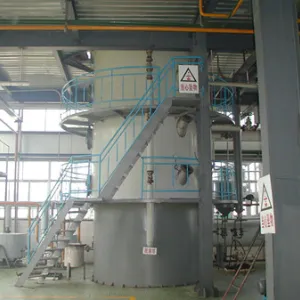
In the refining process of palm kernel oil, distillation columns play a pivotal role. They are the key equipment for separating and purifying various components in palm kernel oil, which is crucial for improving the quality and stability of the final product. The distillation process not only helps to remove impurities but also enhances the nutritional value and flavor of the oil.
Vacuum distillation is a widely used technology in palm kernel oil refining. It operates under reduced pressure, which lowers the boiling point of the oil and reduces the risk of thermal decomposition. This method is suitable for large - scale production and can handle a wide range of feedstock qualities. The equipment for vacuum distillation is relatively simple and cost - effective. For example, in a typical vacuum distillation setup, the pressure can be reduced to around 1 - 10 mmHg, and the temperature can be controlled within 150 - 250°C.
Molecular distillation, on the other hand, is a more advanced technology. It is based on the principle of the difference in the mean free path of molecules. This method can achieve high - purity separation at very low temperatures (usually below 100°C) and extremely high vacuum (less than 0.1 mmHg). Molecular distillation is particularly suitable for heat - sensitive components in palm kernel oil, such as vitamins and antioxidants. However, the equipment for molecular distillation is more complex and expensive.
The temperature gradient in the distillation process has a significant impact on the separation efficiency and oil quality. A proper temperature gradient ensures that different components in the palm kernel oil are vaporized and condensed at the right time. If the temperature is too high, it may cause thermal degradation of the oil, resulting in a decrease in nutritional value and an increase in free fatty acids. For example, when the temperature exceeds 280°C, the content of trans - fatty acids in the oil may increase significantly.
The vacuum degree affects the boiling point of the oil and the evaporation rate of the components. A higher vacuum degree can lower the boiling point, which is beneficial for heat - sensitive components. However, if the vacuum degree is too high, it may cause foaming and carry - over of the oil, leading to product loss. Generally, for vacuum distillation, a vacuum degree of 1 - 10 mmHg is appropriate, while for molecular distillation, it should be less than 0.1 mmHg.
The residence time of the oil in the distillation column is also crucial. If the residence time is too short, the separation may be incomplete, and some impurities may remain in the oil. On the contrary, if the residence time is too long, it may cause over - heating and degradation of the oil. The optimal residence time depends on the type of distillation technology and the properties of the feedstock, usually ranging from a few minutes to several hours.
One common mistake is inaccurate temperature control. This may be due to improper calibration of temperature sensors or incorrect settings of heating systems. To solve this problem, regular calibration of temperature sensors is necessary, and advanced temperature control systems should be used to ensure accurate temperature regulation.
Another mistake is improper adjustment of the vacuum degree. This may be caused by leaks in the vacuum system or incorrect operation of vacuum pumps. Regular inspection of the vacuum system for leaks and proper maintenance of vacuum pumps can help to solve this problem.
Incorrect setting of residence time is also a common issue. This may be due to improper adjustment of the flow rate of the oil or incorrect design of the distillation column. To address this, the flow rate of the oil should be carefully adjusted according to the capacity of the distillation column, and the design of the column should be optimized to ensure proper residence time.
If you want to learn more about palm kernel oil distillation technology and get the Palm Kernel Oil Distillation Process Parameter Comparison Table, please click here to download the PDF version. Let's work together to improve the efficiency and quality of palm kernel oil refining!
 457
|
457
|
 Mustard Seed Oil Extraction Machinery
advantages of Mustard Seed Oil Extraction
high-quality Mustard Seed Oil
efficient Mustard Seed Oil processing
energy saving Mustard Seed Oil extraction
automated Mustard Seed Oil machinery
Mustard Seed Oil production equipment
versatile Mustard Seed Oil extraction
Mustard Seed Oil refining technology
Mustard Seed Oil Extraction Machinery
advantages of Mustard Seed Oil Extraction
high-quality Mustard Seed Oil
efficient Mustard Seed Oil processing
energy saving Mustard Seed Oil extraction
automated Mustard Seed Oil machinery
Mustard Seed Oil production equipment
versatile Mustard Seed Oil extraction
Mustard Seed Oil refining technology
 486
|
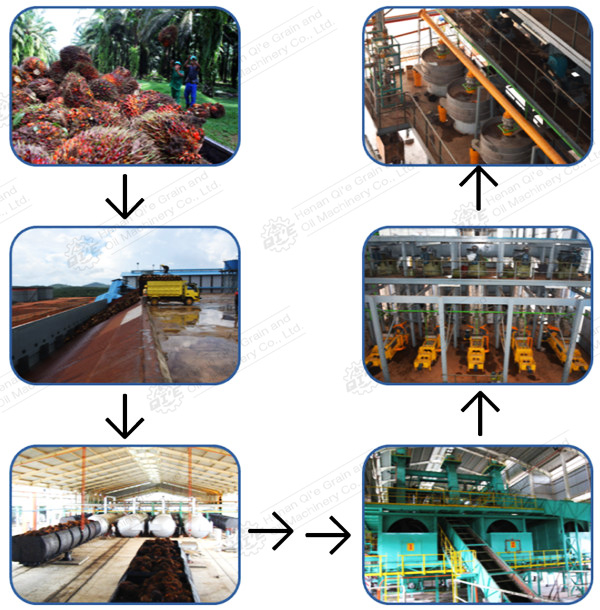
palm oil processing enterprises
customized palm kernel oil production line
production flow optimization
regions with high palm cultivation rates
486
|
palm oil processing enterprises
customized palm kernel oil production line
production flow optimization
regions with high palm cultivation rates
 374
|
Cold-pressed sunflower oil production process
Low-temperature pressing technology
High-end edible oil process
Sunflower oil nutrition retention
Cold-pressed equipment selection
374
|
Cold-pressed sunflower oil production process
Low-temperature pressing technology
High-end edible oil process
Sunflower oil nutrition retention
Cold-pressed equipment selection
 434
|
rice bran oil extruder
extrusion equipment selection
oil yield improvement
rice bran oil extraction technology
extruder material impact
434
|
rice bran oil extruder
extrusion equipment selection
oil yield improvement
rice bran oil extraction technology
extruder material impact
 449
|
Hydraulic oil press
Screw oil press
Sesame oil extraction equipment
Small - scale oil extraction equipment
Sesame oil pressing process
449
|
Hydraulic oil press
Screw oil press
Sesame oil extraction equipment
Small - scale oil extraction equipment
Sesame oil pressing process








.jpg)