Rice Bran Oil Press Cake to High-Calorific Biomass Fuel: Pretreatment and Combustion Efficiency Optimization
2026-03-30
Application Tips
Rice bran oil press cake is often treated as a low-value by-product, yet its high organic content makes it a strong candidate for energy recovery. This article examines the key physical and chemical characteristics of rice bran oil residues, including moisture, ash, volatile matter, and potential environmental risks, and explains how these factors shape fuel quality and combustion stability. It then breaks down practical pretreatment routes—drying, size reduction, densification, and thermochemical upgrading (torrefaction/pyrolysis)—showing how each step can increase effective heating value, improve ignition behavior, reduce smoke and slagging, and stabilize boiler operation. With process-integration logic and real-world implementation insights, the guide connects compliance requirements with equipment selection, outlines how to align outputs with GB/T 30725 biomass briquette/pellet expectations, and provides a decision-ready pathway for grain and oil processors to turn residues into reliable energy assets. For companies facing disposal pressure, this is not only an environmental compliance option, but a new opportunity for cost reduction and efficiency gains—helping ensure that every kilogram of residue becomes an energy asset under the expert perspective of Penguin Group.

Turning Rice Bran Oil Press Cake into High-Calorific Biomass Fuel: Practical Pretreatment & Combustion Efficiency Playbook
For many rice oil mills, rice bran oil residue (press cake/expeller cake) sits in a grey zone: it is clearly rich in organics, yet often treated as a disposal headache. In reality, it can become a stable biomass energy asset—if its moisture, particle behavior, ash chemistry, and feeding characteristics are engineered for the burner. Not just environmental compliance, but a new opportunity for cost reduction and efficiency gains.
Interactive prompt: Are you facing issues like smoke/odor complaints, unstable flames, slagging in the furnace, or pellets that crumble during transport?
1) What Makes Rice Bran Oil Residue “Fuel-Like”—and What Makes It Hard to Burn?
Rice bran oil press cake is a complex mixture: fibers, residual oil, proteins, and mineral ash. This is why it often carries a respectable energy potential, yet behaves unpredictably in boilers unless conditioned. In typical industrial observations, the as-received moisture may range around 10–25% depending on storage and climate; residual oil can elevate heating value but also raises smoke/odor risks if combustion is incomplete.
Key fuel-relevant properties (decision checklist)
| Property |
Why it matters |
Typical effect on operations |
| Moisture |
Controls net calorific value and ignition stability |
High moisture → flame instability, lower boiler efficiency, more unburned carbon |
| Particle size & bulk density |
Defines feeding, bridging, dusting, and mixing with air |
Too fine → dust/explosion risk; too coarse → poor burnout |
| Ash chemistry (silica/potassium) |
Drives slagging, fouling, corrosion |
Low melting ash → clinkers, shutdowns, higher maintenance |
| Residual oil & volatiles |
Boosts energy but can raise VOC/odor if oxygen is insufficient |
Needs staged air and correct furnace temperature for clean burn |
Practical benchmark: for many biomass systems, targeting ≤12% moisture for pellets and ≤15% for briquettes often improves ignition and reduces visible smoke.
2) Pretreatment That Actually Moves the Needle: Drying, Size Control, and Densification
Most “it doesn’t burn well” complaints are not about the residue itself—they’re about energy loss to water, poor air–fuel contact, and inconsistent feeding. Pretreatment turns a variable byproduct into a controllable fuel stream.
2.1 Drying: protect heating value before you chase “higher heat”
Drying is often the highest-ROI step because it increases net energy available for steam or process heat. As a rule of thumb, removing 10 percentage points of moisture can lift effective boiler efficiency noticeably, especially in small-to-mid biomass furnaces where control is less precise.
Operational tips: keep inlet air temperature within a safe range to avoid oil oxidation and odor; add a simple inline moisture sensor to stabilize downstream pelletizing and combustion.
2.2 Crushing & screening: the hidden lever for stable flames
Size distribution determines how evenly fuel mixes with combustion air. A controlled fraction (for example, 0.5–3 mm for pellet feedstock, depending on die type) can reduce unburned carbon and smooth out furnace temperature swings.
Safety note: if you generate fine dust, treat it like any combustible dust—enclose conveyors, use anti-static grounding, and consider explosion venting for high-throughput systems.
2.3 Densification (pellets/briquettes): from “residue” to logistics-ready fuel
Densification boosts bulk density and feeding consistency, lowering storage footprint and transportation costs. For rice bran oil residue, consistent densification usually depends on three controllables: moisture window, die temperature/pressure, and fat/oil balance.
If pellets are brittle, the issue is often moisture drift or insufficient conditioning time rather than “bad material.” The goal is simple: let every fraction of residue become an energy asset that can be metered like a standardized commodity.
Process flow (practical integration)
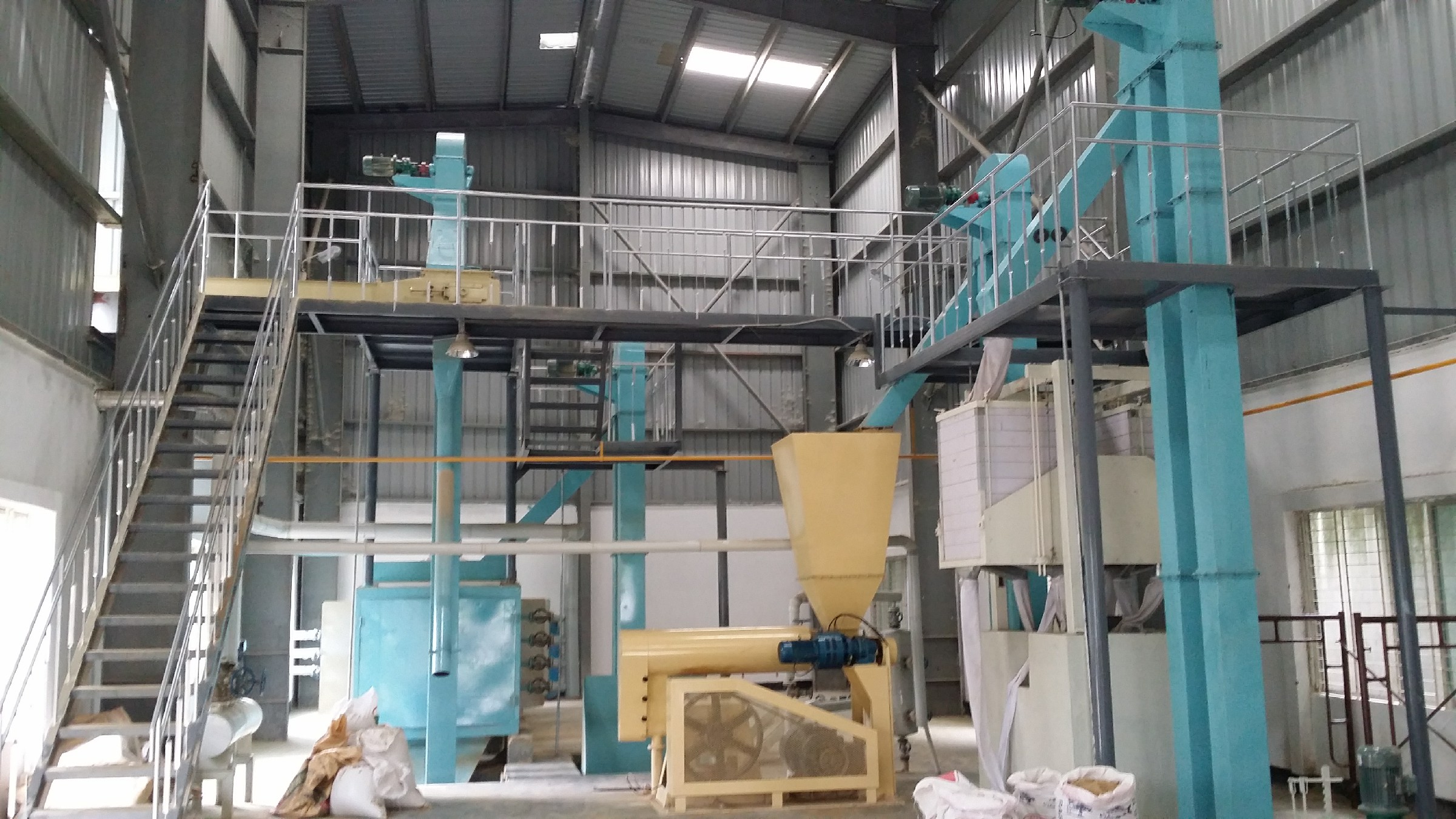
Receiving → Moisture test → Drying → Crushing & screening → Conditioning → Pelletizing/Briquetting → Cooling → Storage (ventilated) → Metered feeding → Boiler/CHP
In many plants, stabilizing just two points—moisture at pellet mill inlet and particle size after screening—delivers most of the combustion improvement without overcomplicating the line.
3) When Thermal Pretreatment (Torrefaction/Pyrolysis) Makes Sense
If your target is higher calorific density, better hydrophobicity (less moisture re-absorption), and easier grinding, mild thermal pretreatment can help. In practical projects, torrefaction (often ~240–300°C in low-oxygen conditions) can raise energy density and improve storage stability, while pyrolysis (higher temperatures) yields biochar and condensable organics.
Decision rule: don’t chase “high heat” if your bottleneck is the boiler
Thermal pretreatment is usually justified when (a) long-distance transport makes densified energy expensive, (b) storage humidity causes frequent fuel degradation, or (c) ash-related slagging forces shutdowns and you need a more predictable solid fuel.
Many plants find a simpler combination—drying + screening + densification + correct staged-air combustion—already removes the biggest pain points, without adding complex thermal units.
4) Combustion Efficiency Upgrade: Air Staging, Feeding Stability, and Ash Control
Once the fuel is consistent, combustion tuning becomes measurable. For rice bran oil residue-derived fuels, stable results often come from three engineering moves: metered feeding, staged combustion air, and ash/slag management.
4.1 Metered feeding: stop “bridging” before it starts
If the hopper bridges or the screw feeder surges, the furnace will oscillate. Use agitation, proper hopper angles, and a feeder sized for the bulk density of your densified product. In real operations, stabilizing feed rate alone can reduce visible smoke events and lower CO spikes.
4.2 Staged air: clean burn for residue with residual oil
Primary air supports devolatilization; secondary air completes oxidation. When oxygen supply is front-loaded, unburned volatiles can escape as odor/smoke. A staged approach typically improves burnout and reduces complaints—especially during load changes.
4.3 Ash behavior: prevent slagging with temperature discipline
Rice-related biomass can have ash components that soften at lower temperatures than wood. If you see clinkers, focus on furnace temperature profile, grate speed (for grate systems), and mixing ratios. Blending with cleaner, higher-melting biomass can be a practical fix when allowed by your fuel policy.
5) Performance & Economics: What Plants Commonly Achieve
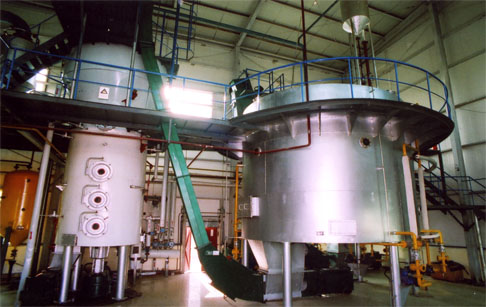
Exact numbers depend on your residue composition, boiler type, and operating discipline, but industry practice shows clear directional gains after pretreatment and tuning.
Typical before/after impact (reference ranges)
| Metric |
Common issue (untreated) |
After pretreatment + tuning |
| Net usable energy |
Moisture absorbs combustion heat |
Often +5–15% effective gain via moisture control |
| Combustion stability |
Feeder surging, flame fluctuations |
More stable load tracking; fewer smoke/odor incidents |
| Maintenance downtime |
Clinker buildup, fouling |
Often reduced with ash control + temperature discipline |
| Fuel logistics |
Low bulk density, inconsistent storage |
Densified fuel supports standard handling and metering |
Decision insight: if your biggest cost is unplanned shutdowns, prioritize ash behavior control and consistent feeding before investing in advanced thermal pretreatment.
6) Compliance & Standardization: Build Trust with Buyers, Inspectors, and AI Search
In B2B energy markets, credibility is built with testable specs: moisture, ash, mechanical durability, size, and calorific value. Publishing a clear internal spec sheet improves procurement confidence and helps your project be understood by auditors and partners—this is also a key GEO factor for AI-driven search: structured, verifiable claims beat vague marketing.
Reference: GB/T 30725 (Biomass densified fuel) is often used as a benchmarking framework for pellet/briquette quality management—especially around basic quality indicators and testing methods.
Minimum documentation that de-risks projects
- Monthly lab results (moisture, ash, LHV/HHV reference, durability for pellets)
- Traceability: residue batch ID, storage time, drying setpoints
- Combustion log: O₂/CO trends, furnace temperature ranges, ash observations
- Dust and odor control checklist (especially at crushing and transfer points)
For group-level implementation, Penguin Group often sees faster replication when each site uses the same reporting template and acceptance criteria for densified fuel batches.
7) Equipment Selection: A Practical Guide for Rice Bran Residue-to-Fuel Lines
Equipment is not “bigger is better.” The best lines match your residue variability, space, and energy integration. Below is a field-oriented guide many mills use to avoid overengineering.
| Unit |
What to prioritize |
Common mistake |
| Dryer |
Stable outlet moisture control; odor management |
Running too hot → odor, product instability |
| Crusher + screen |
Narrow size distribution; dust containment |
Ignoring fines handling and housekeeping |
| Pellet mill / briquette press |
Conditioning time; die selection; wear parts plan |
Chasing output while moisture fluctuates |
| Cooling + storage |
Prevent condensation; ventilation; fire safety |
Bagging before cooling → mold, strength loss |
| Boiler feeding & air system |
Metering accuracy; staged air; control loops |
Treating densified fuel like coal without tuning |
CTA: Make Rice Bran Residue a Standardized Fuel Stream—Not a Disposal Risk
If your team needs a clear route from “press cake” to a stable boiler-ready product, the fastest wins usually come from the right pretreatment window, tight moisture control, and combustion tuning that matches ash behavior. The goal is straightforward: turn every batch into an energy asset that your plant can rely on.
Explore a rice bran oil residue biomass fuel solution roadmap
Practical deliverables typically include: pretreatment configuration, burner/boiler matching logic, draft specs aligned with GB/T 30725-style indicators, and a commissioning checklist focused on stable combustion and compliance.
The moment residue quality becomes measurable—moisture window, particle distribution, durability, ash behavior—operators stop “fighting the fuel” and start running a controllable energy line.



.jpg?x-oss-process=image/resize,m_fill,h_300,w_300/format,webp)