Detailed Explanation of the Core Technology of Physical Pressing of Sunflower Oil: Key Steps to Improve Oil Yield and Nutrient Retention
2025-10-30
Technical knowledge
Uncover the core technology of physical pressing of sunflower oil: How to improve the oil yield without destroying the nutritional components through precise temperature control and pressure management? This article delves into the protection mechanisms of key parameters in the pressing process for active substances such as vitamin E and unsaturated fatty acids. It compares the differences between cold pressing, hot pressing, and solvent extraction methods, and solves common practical problems such as high oil content in residues and insufficient fragrance. It helps small and medium - sized processing plants optimize processes and produce high - quality healthy oils.

Understanding the Core Technology of Physical Pressing of Sunflower Oil
In the realm of sunflower oil production, physical pressing technology stands out as a method that combines high - yield extraction with excellent nutrient retention. Let's dive deep into the core logic of this technology.
Working Principle of Physical Pressing
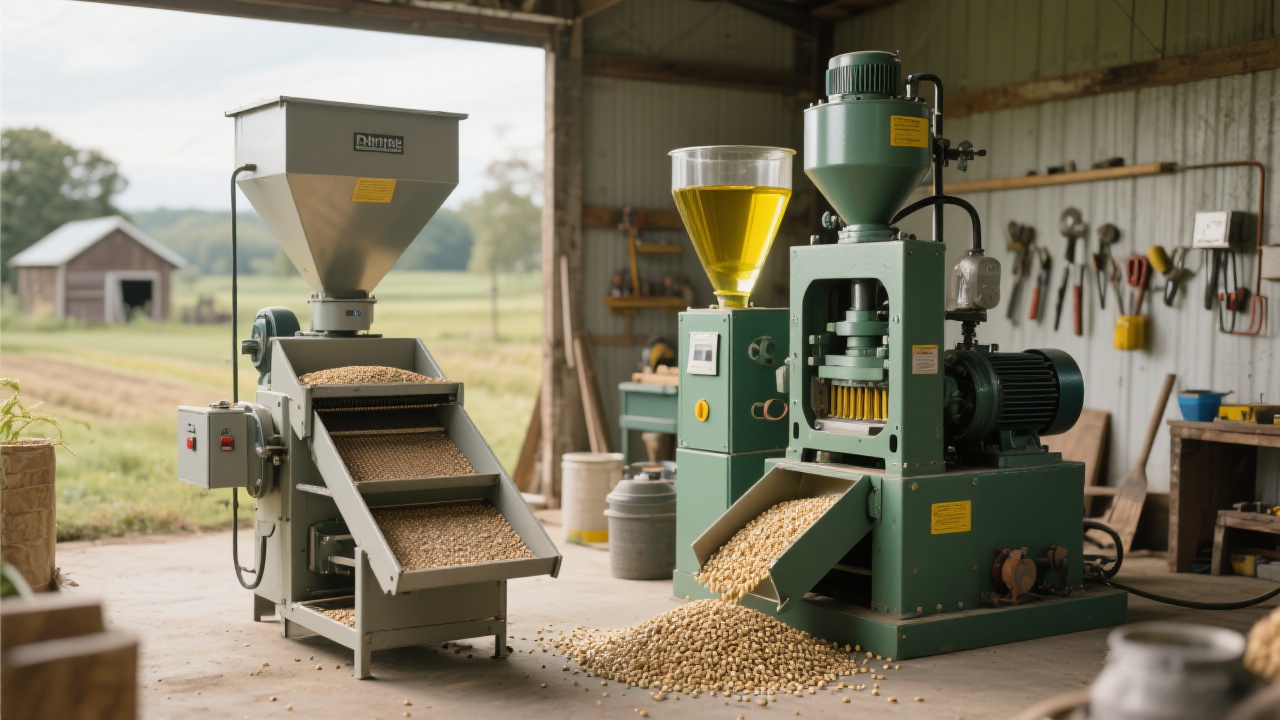
Physical pressing of sunflower oil operates on a straightforward principle. It uses mechanical force to squeeze oil from sunflower seeds. The process can be visualized as a step - by - step operation. First, the seeds are fed into the press chamber. Then, through the rotation and compression of the screw or other pressing components, the oil is gradually separated from the seeds. Here is a simple table to illustrate the basic steps:
| Step |
Description |
| Seed Feeding |
Load sunflower seeds into the press chamber. |
| Compression |
The pressing mechanism squeezes the seeds to release oil. |
| Oil Separation |
The separated oil flows out through specific channels. |
Key Control Variables
To achieve optimal results in physical pressing, several key control variables need to be carefully managed.
- Pressure Range: Generally, a pressure range of 20 - 50 MPa is commonly used in sunflower oil physical pressing. Higher pressure can increase the oil yield, but excessive pressure may damage the oil quality and increase the energy consumption of the equipment.
- Temperature Interval: The temperature during pressing also plays a crucial role. For cold pressing, the temperature is usually controlled below 40°C to preserve the maximum amount of nutrients. In hot pressing, the temperature can reach 100 - 120°C, which can improve the oil yield but may cause some loss of nutrients. Here is a temperature - VE loss对照表:
| Temperature (°C) |
VE Loss (%) |
| 40 |
Less than 5 |
| 80 |
10 - 15 |
| 120 |
20 - 30 |
Material Moisture Regulation: The moisture content of sunflower seeds should be around 8% - 12%. Too high moisture can lead to low oil yield and poor oil quality, while too low moisture may cause the seeds to be too hard and difficult to press.
Nutrient Protection Mechanism Comparison
There are different methods of sunflower oil extraction, and each has its own impact on nutrient protection.
- Cold Pressing: As mentioned before, cold pressing at low temperatures (below 40°C) can effectively preserve nutrients such as vitamin E and unsaturated fatty acids. It retains about 95% of the original nutrients in the seeds.
- Hot Pressing: Hot pressing at higher temperatures can increase the oil yield but may cause a certain degree of nutrient loss. It usually retains about 70% - 80% of the original nutrients.
- Solvent Method: The solvent method uses chemical solvents to extract oil. Although it has a high oil yield, it may leave some solvent residues and cause significant nutrient loss, retaining only about 50% - 60% of the original nutrients.
Clarifying Common Misconceptions
One common misconception is that high pressure always equals high oil production. In fact, as we mentioned earlier, excessive pressure can damage the oil quality and increase energy consumption. Another misconception is that all physical pressing methods are the same. In reality, the differences in temperature, pressure, and other variables can lead to significant differences in oil quality and nutrient retention.
Practical Experience Sharing
Based on the experience of front - line engineers, here are some practical tips:
- Pretreatment Methods: Before pressing, the sunflower seeds should be cleaned and screened to remove impurities. Roasting the seeds at a proper temperature can also improve the oil yield and flavor.
- Equipment Debugging Points: Regularly check and adjust the pressure, temperature, and speed of the pressing equipment to ensure its normal operation. Calibrate the sensors and control systems to maintain accurate parameter control.
- Residue Detection Standards: The oil content in the residue should be controlled below 5%. If the oil content in the residue is too high, it indicates that the pressing process needs to be optimized.
Interactive Question Module
Do you have any questions about sunflower oil physical pressing technology? Feel free to leave your questions below, and we will answer them as soon as possible.
If you want to learn more about the detailed operation guide of sunflower oil physical pressing technology, download our free PDF guide here or leave a message to consult our experts!





.jpg?x-oss-process=image/resize,m_fill,h_300,w_300/format,webp)