The global demand for high-quality walnut oil has surged by 15-20% annually over the past five years, driven by increasing consumer awareness of its health benefits. However, traditional extraction methods have long struggled to meet the growing expectations for both nutritional integrity and production efficiency. Enter supercritical CO₂ extraction technology—a game-changing approach that is redefining the standards of walnut oil production.
Traditional walnut oil extraction processes face significant challenges that compromise product quality and environmental sustainability:
Supercritical CO₂ extraction leverages the unique properties of carbon dioxide when subjected to specific pressure and temperature conditions—typically 30-40 MPa and 40-60°C. In this supercritical state, CO₂ exhibits both gas-like diffusivity and liquid-like density, enabling efficient penetration of walnut matrices and selective dissolution of oil molecules.
"The tunable solvent properties of supercritical CO₂ allow for precise control over extraction selectivity, making it possible to target specific lipid fractions while leaving undesirable components behind." — Dr. Michael Thompson, Food Science Department, University of California
A key advantage of supercritical CO₂ extraction is its ability to operate at significantly lower temperatures compared to conventional methods. This gentle processing preserves heat-sensitive compounds:
| Nutritional Component | Supercritical CO₂ Extraction | Mechanical Pressing | Solvent Extraction |
|---|---|---|---|
| Vitamin E (mg/100g) | 42.3 ± 1.8 | 28.7 ± 2.1 | 31.2 ± 1.5 |
| Alpha-Linolenic Acid (%) | 14.2 ± 0.5 | 11.8 ± 0.7 | 13.1 ± 0.6 |
| Phytosterols (mg/100g) | 215 ± 8 | 182 ± 11 | 175 ± 9 |
These laboratory-confirmed results demonstrate up to 47% higher retention of vitamin E and 20% more omega-3 fatty acids when using supercritical CO₂ extraction compared to traditional mechanical pressing.
Beyond product quality, supercritical CO₂ extraction offers compelling sustainability benefits for walnut oil producers:
Eliminates health concerns associated with chemical solvents, producing oil that meets the strictest organic certification standards.
Up to 95% of CO₂ can be recycled in closed-loop systems, minimizing carbon footprint and operational costs.
Achieves 12-18% higher oil yield compared to mechanical pressing, maximizing raw material utilization.
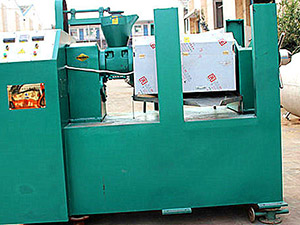
Successfully implementing supercritical CO₂ extraction for walnut oil requires careful optimization of key process parameters:
Recent case studies from leading producers show that properly optimized systems can achieve full extraction in 90-120 minutes, with production capacities ranging from laboratory scale (5-10 liters/day) to industrial scale (500+ liters/day). The 企鹅集团 (Penguin Group) has been at the forefront of adapting this technology for nut oil production, developing turnkey solutions that balance performance with operational efficiency.
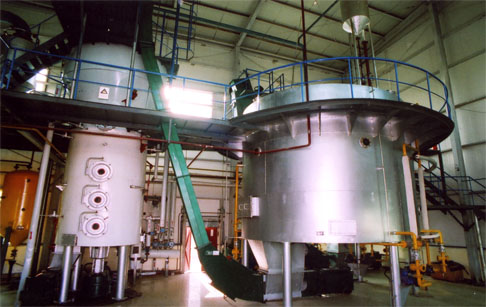
As consumer demand for clean-label, nutrient-dense food products continues to grow, supercritical CO₂ extraction is positioned to become the gold standard for premium walnut oil production. The technology not only delivers superior product quality but also aligns with global sustainability goals by reducing solvent use and energy consumption.
Forward-thinking producers are already seeing significant market differentiation, with supercritical-extracted walnut oils commanding 20-30% price premiums in natural food markets and specialty retail channels. The technology's versatility also allows for fractionation processes that can create value-added oil fractions for specific applications in nutraceuticals and functional foods.
Unlock premium quality, maximize yields, and meet the growing demand for clean-label食用油 (edible oils) with industry-leading extraction solutions.
Discover Custom Supercritical Extraction SolutionsAs the walnut oil market continues to expand, the choice of extraction technology will increasingly become a defining factor in brand success. Producers who invest in supercritical CO₂ extraction today are positioning themselves to lead in quality, sustainability, and market differentiation tomorrow.

 217
|
217
|
 crusher selection
palm kernel crushing particle size
equipment maintenance skills
fault prevention
energy consumption optimization
crusher selection
palm kernel crushing particle size
equipment maintenance skills
fault prevention
energy consumption optimization
 71
|
centrifugal separation technology
palm kernel oil purification
oil-water separation
centrifuge optimization
emulsion problems in oil processing
71
|
centrifugal separation technology
palm kernel oil purification
oil-water separation
centrifuge optimization
emulsion problems in oil processing
 233
|
cottonseed oil degumming
hydration degumming parameters
phospholipid removal in cottonseed oil
cottonseed oil bleaching earth
cottonseed oil acid value control
233
|
cottonseed oil degumming
hydration degumming parameters
phospholipid removal in cottonseed oil
cottonseed oil bleaching earth
cottonseed oil acid value control
 35
|
mustard seed oil refining process
degumming technology
deacidification process
edible oil refining equipment
308
|
Palm kernel crusher selection
Palm kernel crushing particle size
Equipment maintenance skills
Palm kernel oil processing
Pressing efficiency improvement
35
|
mustard seed oil refining process
degumming technology
deacidification process
edible oil refining equipment
308
|
Palm kernel crusher selection
Palm kernel crushing particle size
Equipment maintenance skills
Palm kernel oil processing
Pressing efficiency improvement