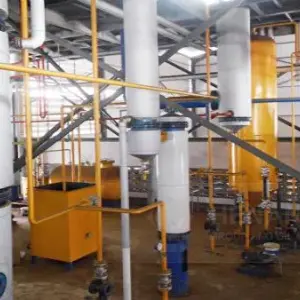
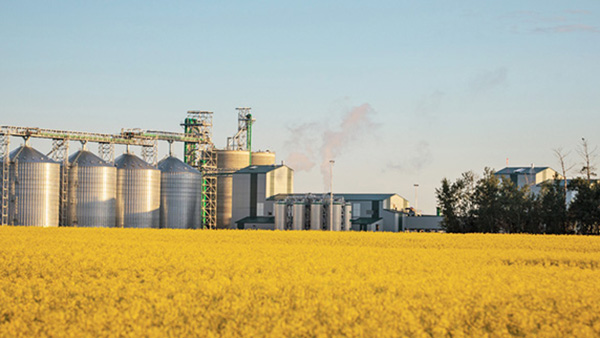
For walnut oil producers and engineering teams, “better oil” is rarely a single equipment decision—it is a chain of controllable variables: kernel condition, moisture window, pressing temperature, residence time, and purification efficiency. This guide maps the walnut oil extraction process from raw material pretreatment to high-efficiency pressing, clarifies how spiral oil press and hydraulic oil press systems behave in real production, and explains where filtration, centrifugation, and even supercritical CO₂ extraction can be justified in a modern line. The objective is repeatability: stable yield, predictable quality, and lower losses.
In a walnut oil production line, pretreatment is not “auxiliary”—it is the first quality gate. Industrial experience shows that inconsistent kernel moisture and excessive fines can swing pressing behavior noticeably, often forcing higher press load, increasing cake residual oil, and accelerating wear.
| Control Point | Recommended Range (reference) | Why It Matters |
|---|---|---|
| Kernel moisture | ~3.5%–6.5% | Controls plasticity during pressing; too high reduces oil release; too low can raise fines & friction heat. |
| Shell fragments / foreign matter | As low as feasible (target <0.5%) | Hard particles damage screw/cage; increase metal wear and risk of off-notes. |
| Oxidation indicators (sensory + PV trend) | Low rancid odor; PV managed per spec | Oxidized kernels can’t be “fixed” by downstream equipment; they define shelf-life. |
Efficient screening and air separation reduce dust and shell carryover. Optical sorting can be justified when targeting premium grades where color and oxidation risk must be controlled. A clean kernel stream helps stabilize press torque and lowers maintenance frequency.
Kernel size reduction increases surface area and shortens oil migration distance, but over-crushing increases fines that can block oil flow paths in the press cage. Many plants operate with a “granular meal” target rather than powder.
For mechanical pressing, many processors condition kernels to ~4%–6% moisture. Gentle hot-air drying is commonly used; overheating can increase darkening and accelerate oxidation. In practice, keeping material temperature typically in the 45–70°C range during conditioning (depending on product positioning) helps balance flowability and oil release without pushing excessive thermal stress.
“Walnut oil press machine” selection is usually driven by capacity, target sensory profile, and allowable residual oil in cake. Mechanical pressing typically delivers a clean-label narrative and simpler compliance footprint than solvent extraction, but demands tighter control of pretreatment and filtration.
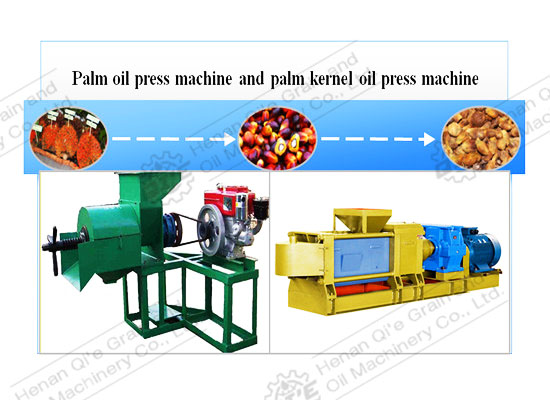
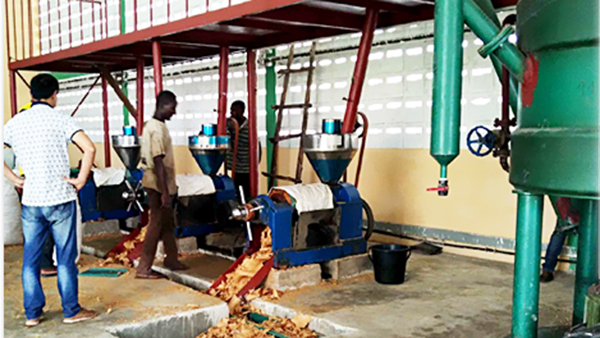
A spiral oil press builds pressure gradually along a rotating screw inside a slotted cage. As volume decreases and friction rises, oil is expelled through cage gaps while solids exit as press cake. For walnut kernels, the key operating reality is torque stability: feed uniformity and moisture consistency reduce sudden load spikes.
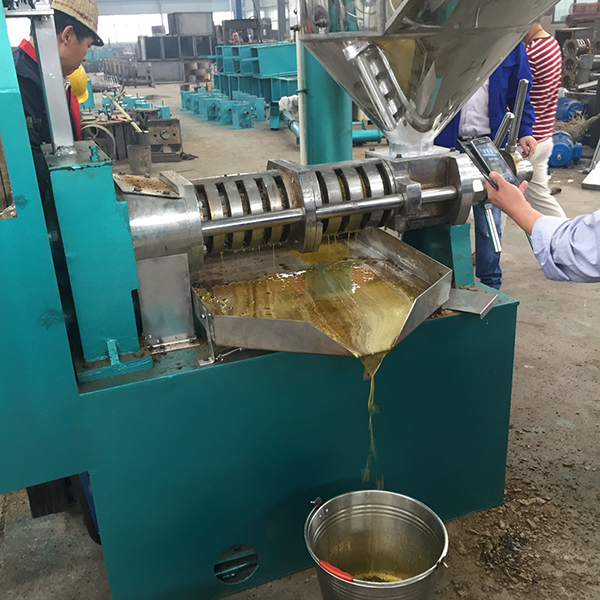
A hydraulic oil press applies pressure via hydraulic cylinders onto a pressing chamber (often with filter cloth). It is typically slower and batch-based, but offers strong control over pressure ramp and can support premium positioning where temperature and gentle pressing behavior are priorities.
Walnut kernels typically contain ~60%–70% oil by mass (variety and origin dependent). In mechanical pressing:
These are reference ranges for process benchmarking; final numbers depend heavily on pretreatment, equipment design, and control strategy.
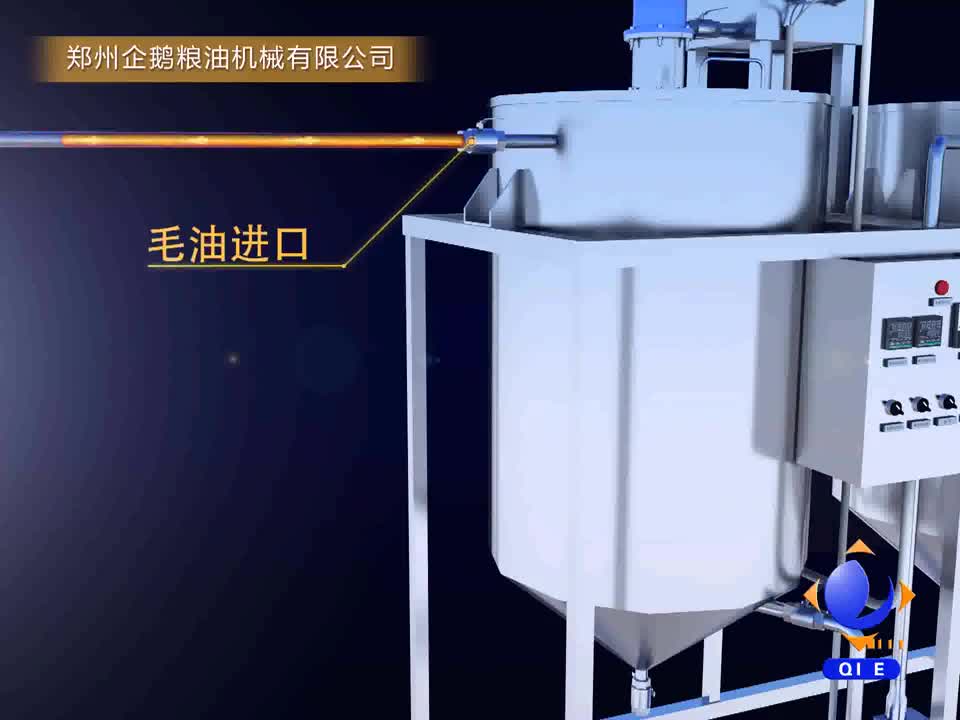
Pressed walnut oil usually carries fine meal, gums, and micro-impurities. If purification is under-designed, the plant will see cloudy oil, fast sedimentation, unstable color, and shorter shelf-life—even if the press itself is performing well.
Plate-and-frame filters or leaf filters are common for final polishing. In many industrial cases, staged filtration (coarse → fine) reduces filter cloth blinding and extends cycle time. As a reference, moving from >200 μm screening to 10–50 μm fine filtration can significantly reduce visible haze, depending on solids load.
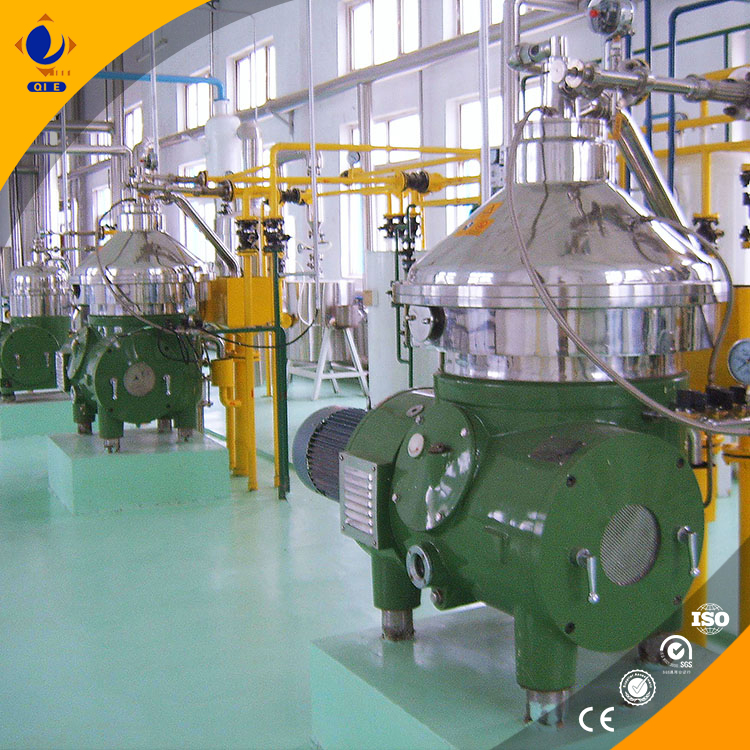
A decanter or disc-stack centrifuge can remove suspended solids efficiently, especially when press oil contains high fines. This reduces the burden on downstream filters and helps stabilize oil clarity. Plants aiming for higher throughput typically find centrifugation a “capacity unlock” for the whole line.
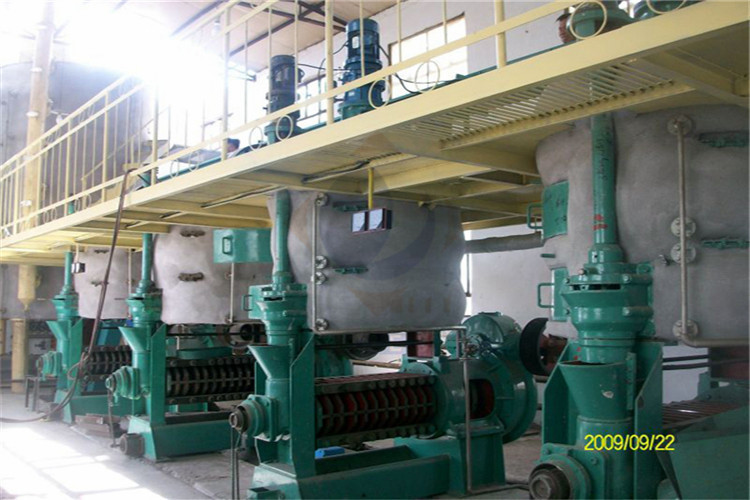
When the primary KPI is maximum oil recovery, mechanical pressing may be complemented—or replaced—by extraction technologies. However, the decision is usually driven by product positioning, regulatory constraints, and the plant’s capability to manage safety systems and solvent/CO₂ handling.
Solvent extraction can reduce residual oil in meal significantly and improve overall recovery, but requires explosion-proof design, solvent recovery, and strict emissions control. It often makes sense in large-scale commodity operations where throughput and yield dominate the business case.
Supercritical CO₂ extraction is valued for low solvent residues and tunable selectivity. Industrial systems commonly operate around 250–350 bar and 40–60°C (process-dependent). The challenges are clear: high CAPEX, pressure-vessel compliance, and more complex operation. For brands selling high-value nutraceutical or specialty food oils, the quality story can justify the engineering overhead.
Many “low yield” cases are actually coordination issues: the press is forced to compensate for unstable feed, or the purification section becomes the bottleneck and backs up the entire line. For procurement and engineering teams, a production line should be evaluated by mass balance + bottleneck mapping.
Screw press wear, cage gap drift, filter cloth condition, and centrifuge balance all affect day-to-day yield and clarity. Plants that schedule wear-part inspection by throughput (tons processed) rather than by calendar often see more stable output and fewer surprise shutdowns.
Feed inconsistency—especially moisture swings and excessive fines after crushing. Stabilizing kernel moisture around a controlled window (often ~4%–6% for pressing) and reducing powder content usually improves torque stability and oil flow more than “turning the press harder.”
For industrial repeatability, they are complementary. Centrifugation removes a large share of fines quickly and protects filters; filtration then polishes clarity for packaging stability. Using only filtration often increases downtime due to rapid clogging.
Spiral presses are typically preferred for continuous throughput and automation. Hydraulic presses are attractive for specialty batches and premium positioning where gentle pressing and controllable pressure profiles are key. The best decision is usually based on target capacity, quality positioning, and purification design.
It can be better for specific product strategies (low residues, premium purity story), but it is not a universal upgrade. It requires high-pressure systems, strong operational discipline, and a clear market premium to justify the complexity.
Penguin Group supports walnut oil producers with pressing, purification, and line-integration thinking—so your process works as a system, not a collection of machines.
Typical scope: process mapping, equipment selection (spiral press / hydraulic press / filtration / centrifuge), and throughput-based layout suggestions.

 407
|
407
|
 palm kernel oil purification
centrifugal separation optimization
oil refining parameters
emulsion prevention in oil processing
industrial centrifuge settings
palm kernel oil purification
centrifugal separation optimization
oil refining parameters
emulsion prevention in oil processing
industrial centrifuge settings
 226
|
palm kernel oil centrifugal separation
centrifugal separators in oil refining
palm kernel oil processing optimization
oil-water emulsification solutions
export quality improvement palm kernel oil
226
|
palm kernel oil centrifugal separation
centrifugal separators in oil refining
palm kernel oil processing optimization
oil-water emulsification solutions
export quality improvement palm kernel oil
 296
|
Cold - pressed sunflower seed oil production process
Low - temperature pressing technology
High - end edible oil process
Sunflower seed oil equipment selection
Quality inspection indicators
296
|
Cold - pressed sunflower seed oil production process
Low - temperature pressing technology
High - end edible oil process
Sunflower seed oil equipment selection
Quality inspection indicators
 211
|
palm kernel oil purification
centrifugal separation technology
centrifuge speed control
feed rate optimization
temperature regulation
211
|
palm kernel oil purification
centrifugal separation technology
centrifuge speed control
feed rate optimization
temperature regulation
 355
|
supercritical CO2 extraction
walnut oil extraction
low temperature preservation
green oil extraction
high-end edible oil technology
355
|
supercritical CO2 extraction
walnut oil extraction
low temperature preservation
green oil extraction
high-end edible oil technology